Every entrepreneur dreams of growing their business.
The first few months are exciting. New customers arrive, revenue starts increasing, and every milestone feels like proof that the business is moving in the right direction.
Then, almost without warning, growth slows.
Sales remain steady but refuse to increase.
The owner works longer hours than ever before.
Employees stay busy all day.
Yet the business seems stuck at the same level month after month.
This is one of the most common phases in the life of a small business—the growth plateau.
The good news is that most businesses don't stop growing because there is no market demand. They stop growing because the systems that helped them reach their current size are no longer enough to take them to the next level.
Growth Doesn't Stop Because Customers Disappear
Many business owners believe slow growth means fewer customers.
In reality, the problem often lies inside the business.
Orders get delayed because inventory isn't updated.
Customer enquiries remain unanswered.
Follow-ups are forgotten.
Business decisions are made based on assumptions rather than data.
Employees spend hours doing repetitive work instead of serving customers.
These small inefficiencies slowly add up until they begin limiting growth.
The challenge isn't attracting more business.
It's managing the business you already have.
The Startup Mindset Doesn't Scale
When a business is new, the owner usually manages everything.
Answering customer calls.
Preparing invoices.
Tracking inventory.
Following up on payments.
Managing employees.
Making every decision personally.
This approach works when there are only a handful of customers.
But as the business grows, the owner eventually becomes the biggest bottleneck.
Instead of leading the business, they spend every day solving operational problems.
Scaling requires moving away from owner-dependent operations toward system-driven operations where routine work follows clear processes.
Your Business Information Is Scattered
Ask many SME owners where they store their business information and the answer often sounds like this:
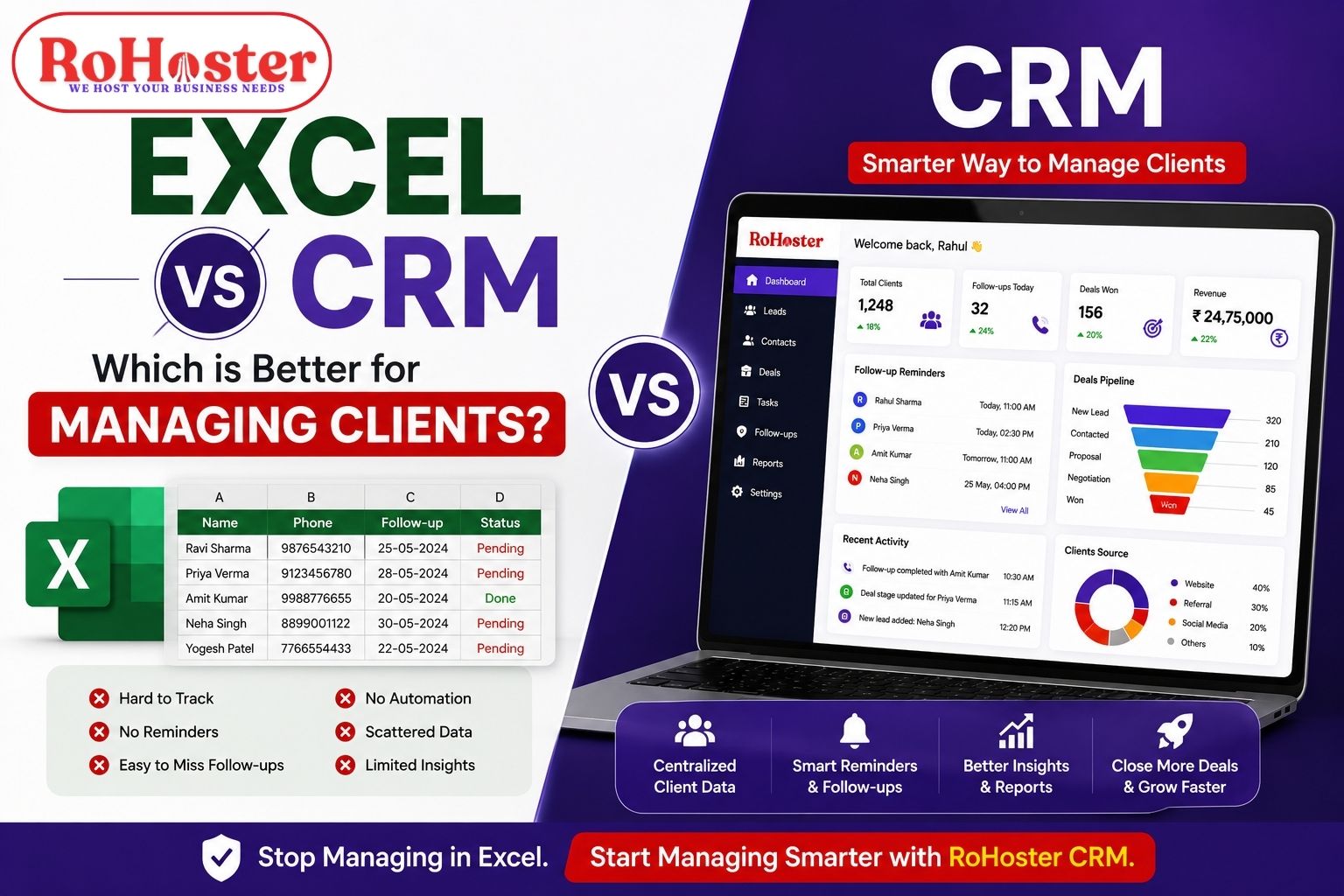
Inventory is maintained in Excel.
Customer enquiries are in WhatsApp.
Invoices are stored in billing software.
Expenses are written in a notebook.
Supplier information is saved in someone's phone.
Business reports are created manually every month.
Every department has information.
Nobody has the complete picture.
This fragmentation creates duplicate work, delays, and confusion.
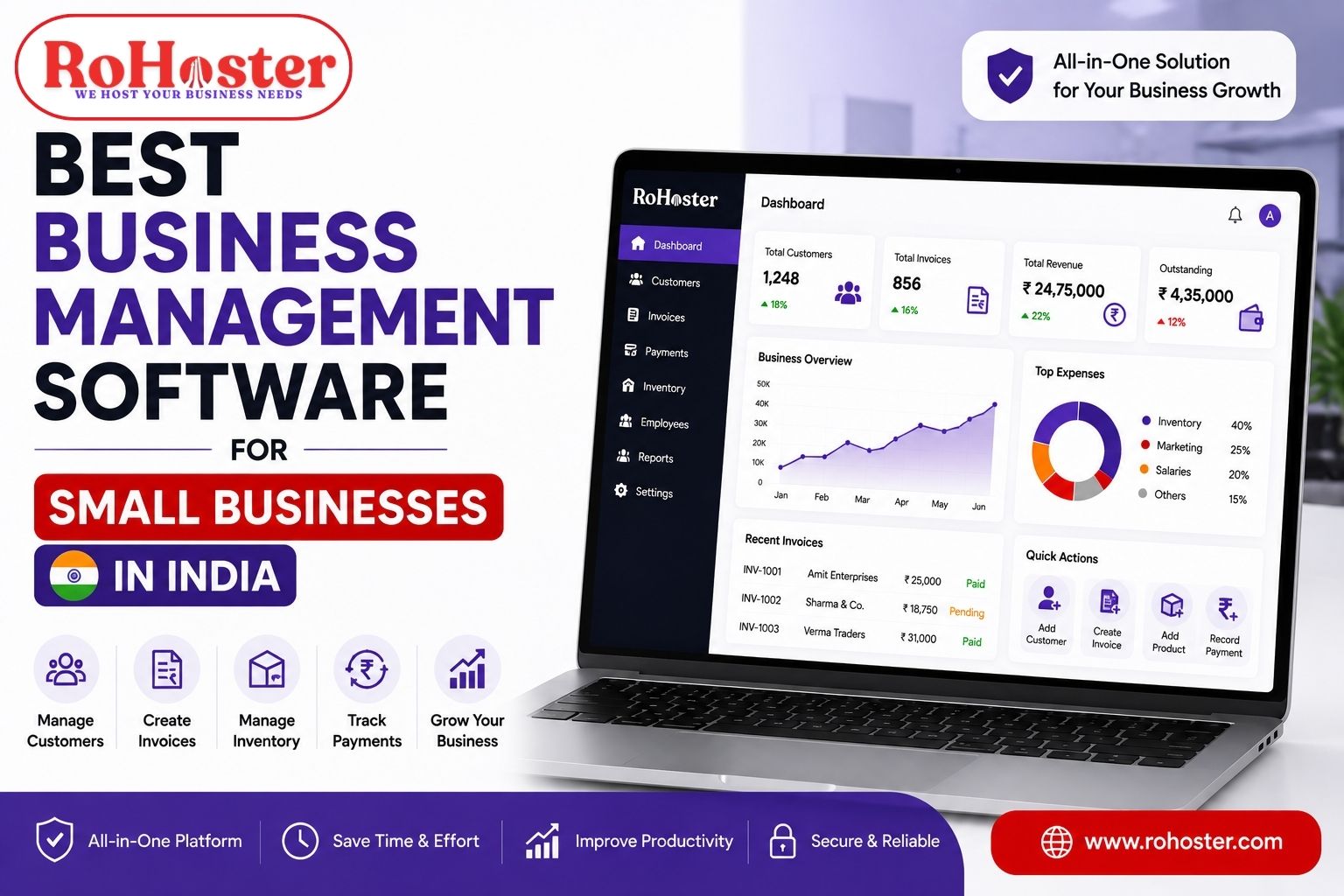
Using business management software helps bring sales, inventory, customers, billing, expenses, and business reports into one centralized platform, making information easier to access and decisions easier to make.
Better Decisions Begin With Better Numbers
Many businesses review only one number at the end of each month.
Sales.
But revenue alone doesn't reveal whether the business is becoming healthier.
Business owners should also understand:
Which products generate the highest margins?
Which customers contribute the most profit?
Which expenses are increasing?
Which sales representatives perform best?
Which products are slowing down?
Which leads actually become customers?
Revenue can increase while profits decline.
That is why successful businesses review profitability—not just turnover.
Our article Understanding Your True Margin: How Live P&L Dashboards Guide Smarter Decisions explains why tracking profit margins helps business owners make more informed decisions instead of relying only on sales figures.
Regular reporting also helps identify opportunities before they become problems.
Business owners who review structured reports every week are often able to react faster than those who wait until month-end.
Learn more in The 3 Critical Business Reports Every Wholesale Distributor Must Review Weekly, where we explain how weekly reporting supports better business decisions.
Manual Work Consumes Your Most Valuable Resource
Time is one of the few resources every business owner has in limited supply.
Yet many SMEs still spend hours every week:
Preparing invoices manually
Updating stock records
Sending payment reminders
Creating daily reports
Following up with customers
Tracking pending orders
None of these activities directly generate growth.
They are necessary—but repetitive.
Automation allows software to perform many routine tasks consistently while employees focus on work that creates value.
Our guide How to Automate 80% of Daily Repetitive Tasks in a Growing Indian SME explains practical ways businesses can automate everyday operations and improve productivity without increasing headcount.
Hiring More People Isn't Always the Answer
When businesses become busy, the first instinct is often to hire more employees.
But adding people without improving processes usually creates new problems.
More communication.
More supervision.
More manual coordination.
More opportunities for mistakes.
Instead of asking,
"How many more employees do we need?"
business owners should ask,
"Which processes can become simpler?"
Efficient systems allow businesses to grow without increasing operational complexity at the same pace.
Existing Customers Can Fuel Future Growth
Many businesses invest heavily in finding new customers while paying very little attention to existing ones.
Yet returning customers often purchase more frequently, require less marketing effort, and are more likely to recommend the business to others.
Maintaining organized customer records helps businesses understand:
Purchase history
Buying frequency
Preferred products
Seasonal buying patterns
Customer value
This information allows businesses to communicate more effectively and create more relevant offers.
Our article How Local Retailers Can Use Customer Purchase History to Drive Repeat Sales explains how businesses can strengthen customer relationships using purchase history instead of relying on generic promotions.
Stop Solving Yesterday's Problems
Many business owners begin each morning by solving issues that should have been prevented yesterday.
Missing inventory.
Delayed deliveries.
Incorrect invoices.
Unanswered customer enquiries.
Outstanding payments.
Most of these problems share one common cause.
Poor visibility.
When information is scattered across different people and different systems, issues remain hidden until they become urgent.
Businesses that centralize their operations spend less time reacting and more time planning.
Growth Requires Standardized Processes
Successful businesses don't depend on memory.
They depend on systems.
Every important activity should follow a consistent process.
For example:
Customer Enquiry
↓
Quotation
↓
Sales Order
↓
Invoice
↓
Payment
↓
Delivery
↓
Customer Follow-up
Standardized workflows reduce mistakes, improve accountability, and make employee training easier.
They also ensure the business continues running smoothly even when key employees are unavailable.
Build a Business That Can Operate Without You
One of the biggest signs of a growing business is not higher revenue.
It's reduced dependence on the owner.
If every approval, every customer complaint, every inventory decision, and every employee question requires the owner's attention, the business has limited room to grow.
Technology cannot replace leadership.
But it can reduce unnecessary dependency by organizing information and simplifying everyday operations.
This allows owners to focus on strategy instead of administration.
How RoHoster Helps Growing Businesses
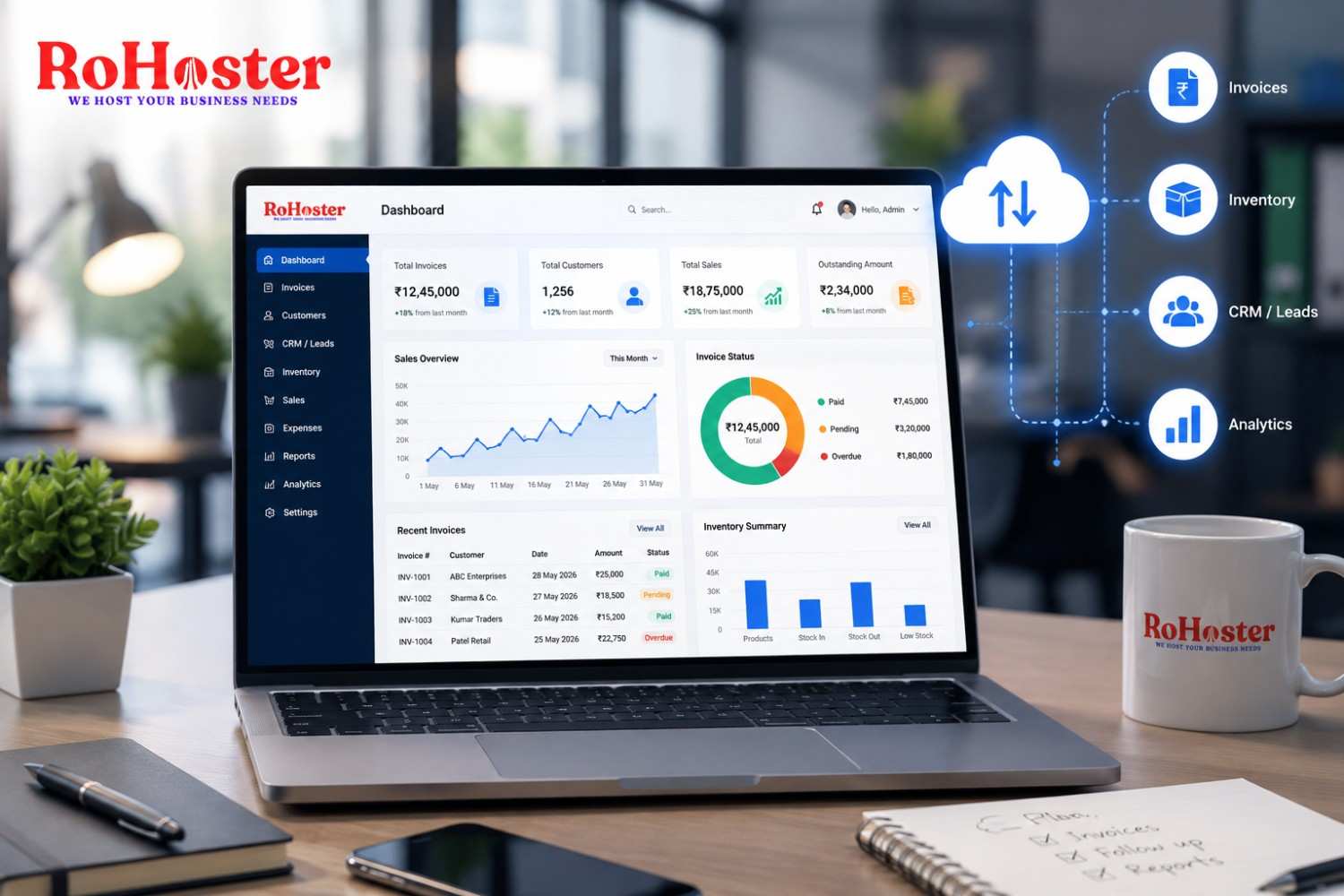
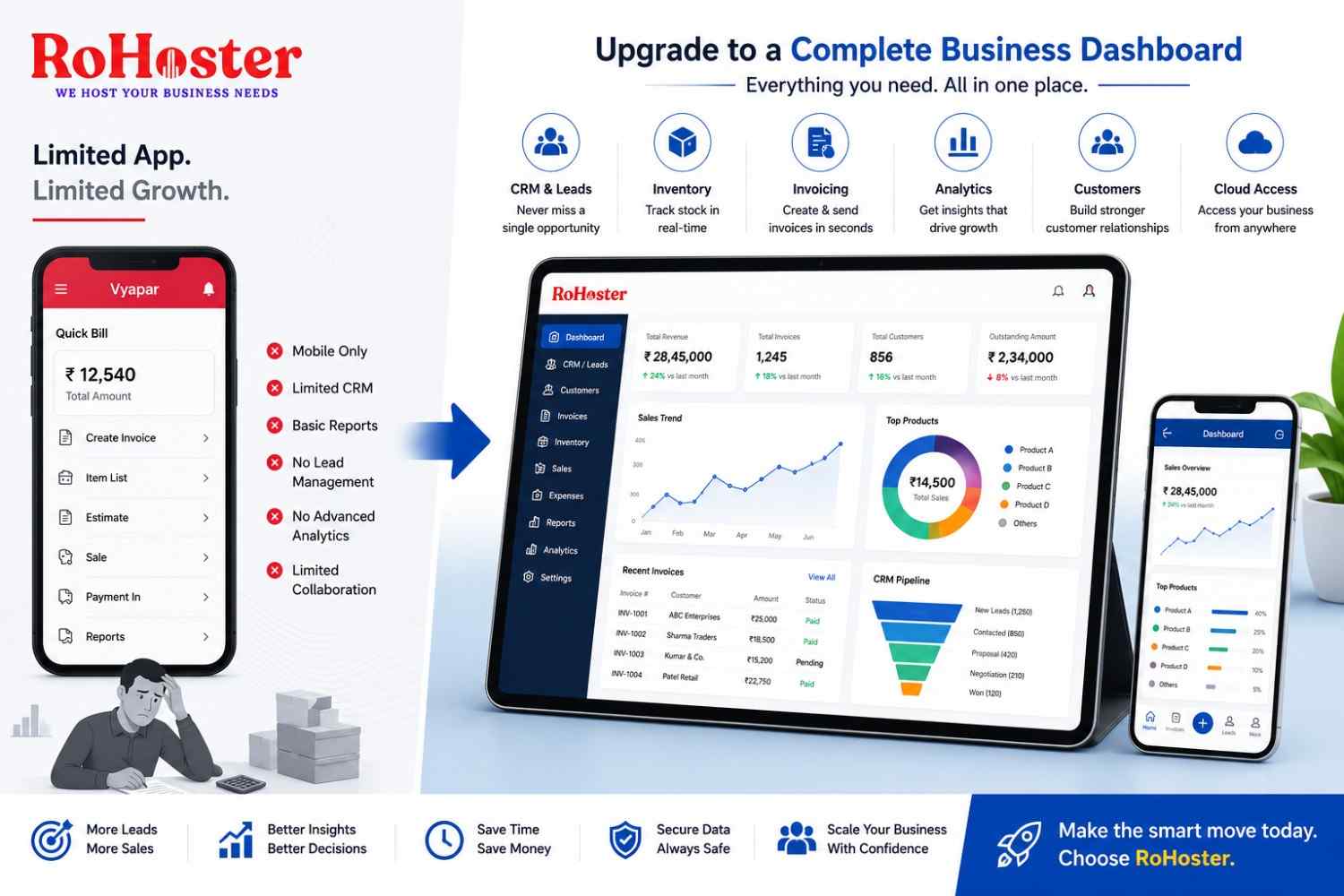
RoHoster helps SMEs centralize their daily operations through one cloud-based business management platform.
Instead of managing different parts of the business across disconnected applications, spreadsheets, and notebooks, businesses can organize information in one place.
Depending on business requirements, RoHoster can support:
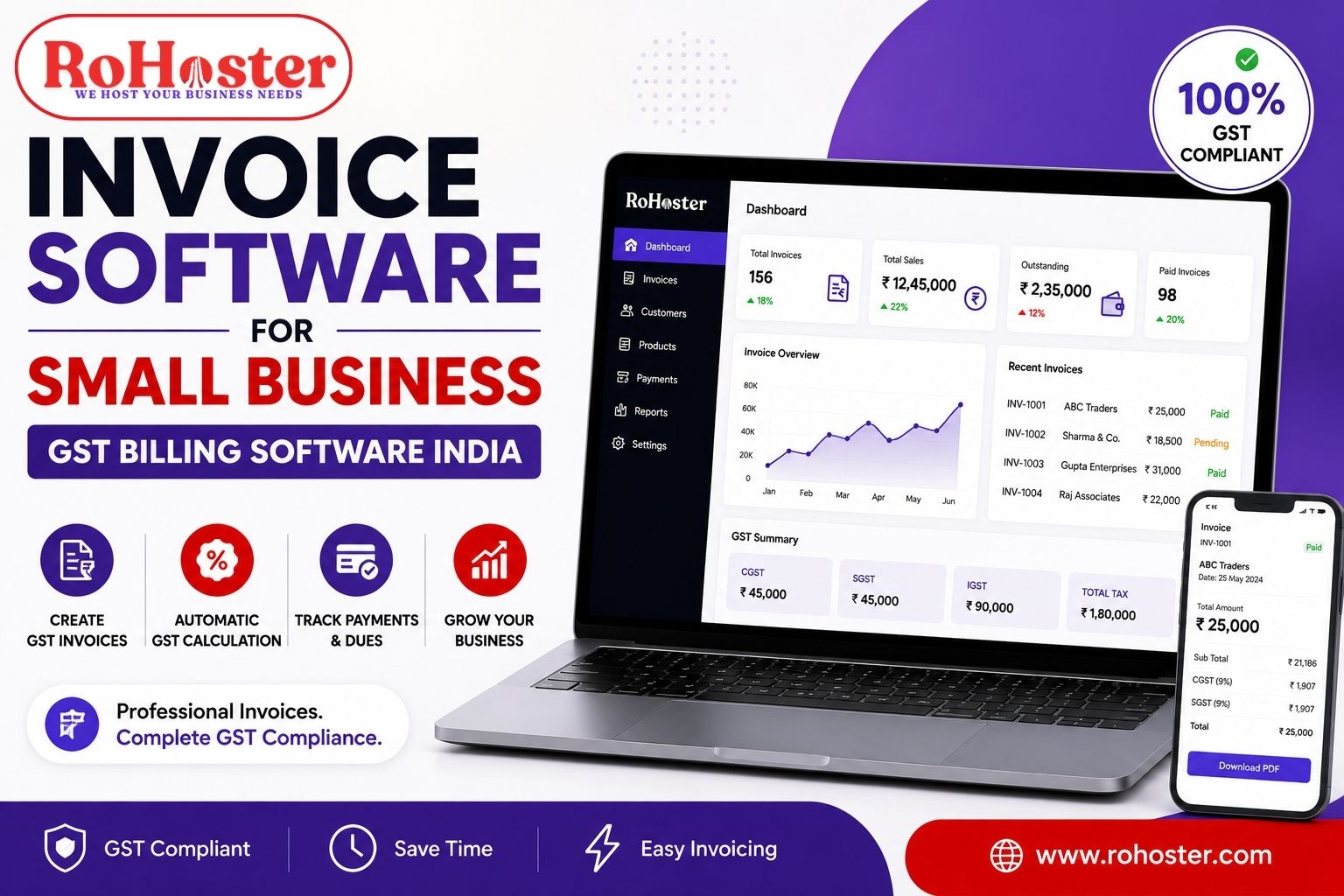
GST Billing
Inventory Management
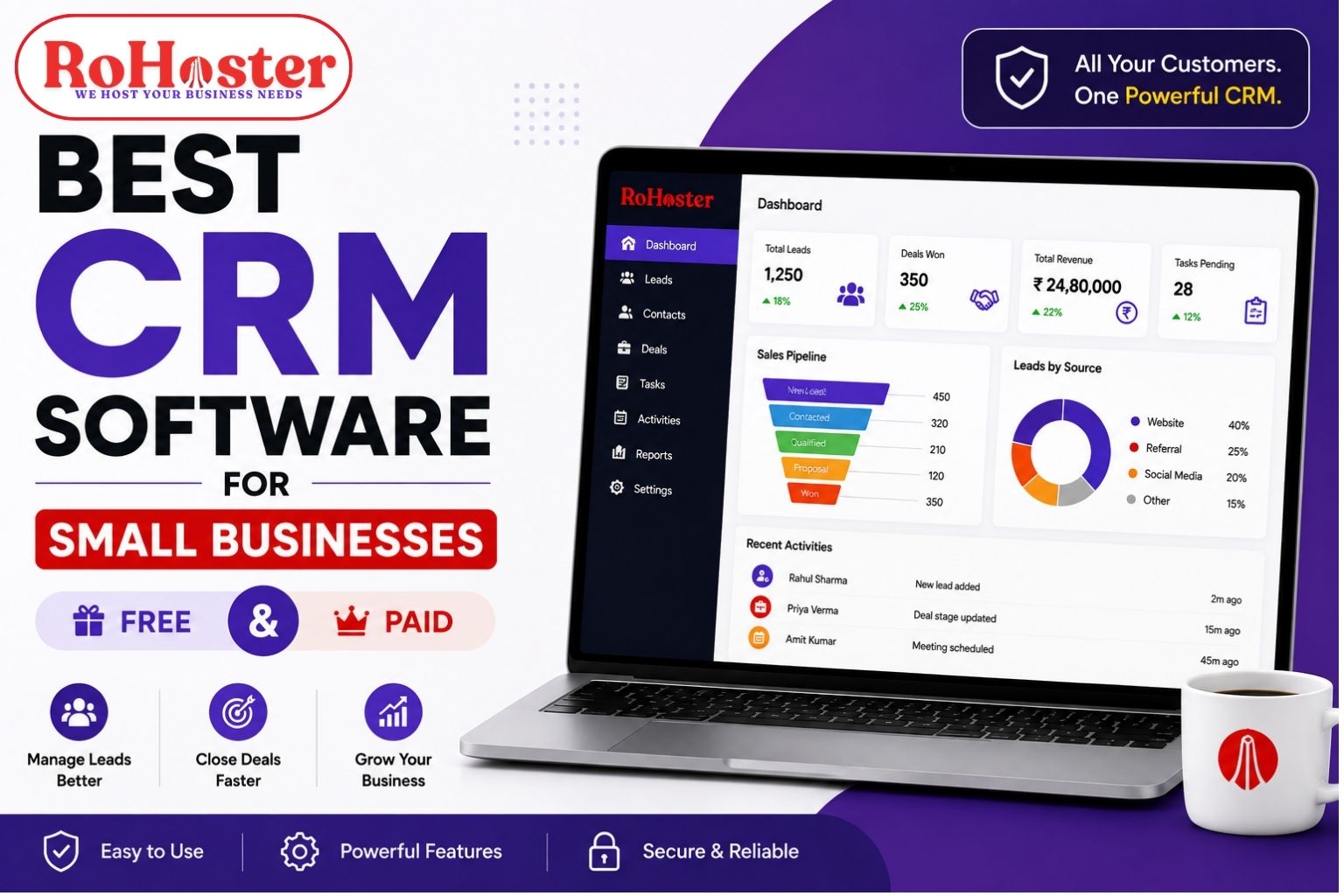
Customer Management
Lead Management
Purchase Management
Sales Tracking
Business Reports
Cloud Access
Multi-user Collaboration
Business Automation
The objective isn't simply to digitize paperwork.
It's to create better visibility, better decision-making, and better business growth.
Conclusion
Most small businesses don't stop growing because opportunities disappear.
They stop growing because manual processes, scattered information, and outdated systems eventually become barriers to expansion.
Businesses that continue growing usually have one thing in common.
They build systems before they become absolutely necessary.
They organize information before it becomes overwhelming.
They automate repetitive work before it consumes valuable time.
And they make decisions based on reliable business data instead of assumptions.
Growth isn't about working every extra hour yourself.
It's about building a business that continues growing because the systems behind it are built to scale.
Further Reading
Want more practical insights on business growth, automation, cloud software, and operational excellence?