Every business owner worries about major challenges.
Economic slowdowns.
New competitors.
Changing customer demand.
But many businesses lose far more money through something much less obvious.
Small operational mistakes.
They seem harmless at first.
A delayed follow-up.
An incorrect stock count.
A missed supplier payment.
An invoice sent a day late.
Individually, these issues appear insignificant.
Repeated every day, they quietly reduce profits, waste employee time, and create poor customer experiences.
The good news is that most of these problems are preventable.
1. Delayed Customer Follow-Ups
A customer who doesn't receive a timely response often contacts another business.
Many opportunities are lost not because of pricing—but because of slow communication.
Organized lead management helps businesses ensure every enquiry receives attention before it is forgotten.
2. Inventory Errors
Running out of stock unexpectedly.
Ordering products that are already available.
Keeping slow-moving inventory for months.
These issues tie up working capital while reducing customer satisfaction.
Businesses still managing inventory manually should read Ditch the Spreadsheets: Why Managing Retail Stock in Excel Is Costing You Money to understand how centralized inventory management improves accuracy.
3. Poor Visibility Into Profitability
High sales numbers don't automatically mean healthy profits.
Without reviewing margins regularly, businesses may unknowingly prioritize products that generate revenue but contribute very little profit.
Our article Understanding Your True Margin: How Live P&L Dashboards Guide Smarter Decisions explains why profitability should guide decision-making—not revenue alone.
4. Manual Repetitive Work
Employees often spend hours every week:
Preparing reports
Updating inventory
Sending reminders
Entering duplicate information
These activities consume valuable time without directly creating business growth.
Automation helps reduce repetitive work while improving consistency.
5. Inconsistent Customer Experience
Customers notice when service quality changes from one employee to another.
Standardized workflows help ensure every customer receives the same professional experience.
Consistency builds trust.
6. Decisions Based on Assumptions
Many owners make important decisions using instinct alone.
Successful businesses combine experience with reliable business information.
Weekly reports reveal patterns that assumptions often miss.
7. Too Much Dependence on the Owner
If every important task requires the owner's approval, growth becomes difficult.
Businesses become stronger when responsibilities, workflows, and information are shared through organized systems.
8. Ignoring Existing Customers
Finding new customers is expensive.
Keeping existing customers is often far more profitable.
Maintaining organized purchase history helps businesses create more relevant communication and encourage repeat business.
Our article How Local Retailers Can Use Customer Purchase History to Drive Repeat Sales explains practical strategies for improving customer retention.
9. Waiting Too Long to Improve Processes
Many businesses only improve their systems after experiencing major operational problems.
A better approach is continuous improvement.
Small process improvements every month create significant long-term gains.
10. Never Reviewing Business Performance
Businesses improve what they measure.
Without regular reviews, owners may overlook declining margins, increasing expenses, slower collections, or falling customer retention.
Our guide The Business Owner's Weekly Checklist: 15 Numbers You Should Never Ignore explains how weekly reviews help businesses identify issues before they become expensive.
Small Improvements Create Big Results
Most businesses don't transform overnight.
Instead, they improve gradually.
A faster billing process.
Better inventory visibility.
More organized customer records.
Clearer employee responsibilities.
Consistent reporting.
Each improvement saves time, reduces mistakes, and strengthens the business.
Technology Supports Better Habits
Business software cannot replace good leadership.
But it can support better operational habits.
When information is organized and workflows are standardized, business owners spend less time solving routine problems and more time planning for growth.
How RoHoster Helps
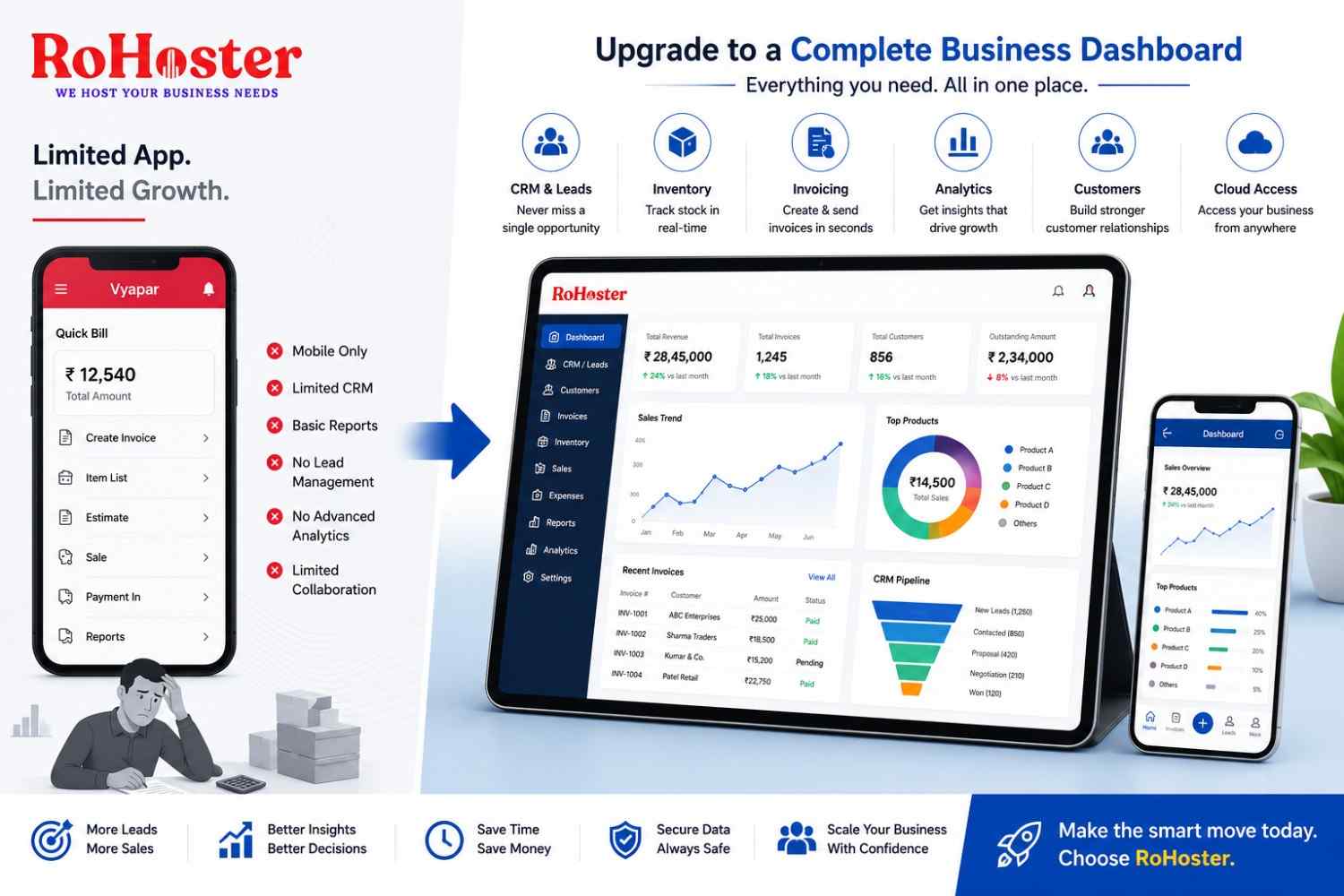
RoHoster helps SMEs centralize operations through one cloud-based business management platform.
Depending on business requirements, RoHoster can support:
GST Billing
Inventory Management
Customer Management
Lead Management
Purchase Management
Business Reports
Workflow Automation
Sales Tracking
Cloud Access
Multi-user Collaboration
Instead of managing multiple disconnected tools, businesses gain one organized platform that supports smarter decisions every day.
Conclusion
Business success rarely depends on avoiding one major mistake.
It depends on preventing hundreds of small mistakes from happening repeatedly.
Businesses that identify inefficiencies early, improve processes consistently, and organize their operations create stronger foundations for sustainable growth.
Because profits don't disappear overnight.
They disappear one small inefficiency at a time.
Further Reading
Want more practical insights on operational excellence, automation, and business growth?