Running a business without reviewing key numbers is like driving a car without looking at the dashboard.
You may continue moving forward.
But you won't know when something is going wrong until it's too late.
Many small business owners only review their finances at the end of the month.
By then, important opportunities have already been missed, and operational problems have often become expensive to fix.
The most successful businesses develop a simple weekly habit.
Every Monday morning, they spend a few minutes reviewing the numbers that matter most.
Those numbers don't just describe the business.
They guide better decisions.
Why Weekly Reviews Matter
A month is a long time in business.
A supplier payment can be delayed.
Inventory can run out.
Expenses can increase.
Customers can stop buying.
Cash flow can tighten.
When these issues are identified weekly instead of monthly, they are much easier to solve.
Weekly reviews help business owners stay proactive instead of constantly reacting to problems.
1. Weekly Sales Revenue
Sales are often the first number every owner checks.
But don't just compare this week's sales with last week's.
Compare them with:
The same week last month
The same period last year
Your weekly target
This helps identify trends rather than isolated numbers.
2. Gross Profit
High sales don't always mean high profits.
A business can increase revenue while earning less money because of discounts, rising supplier costs, or inefficient pricing.
Understanding profitability is just as important as understanding revenue.
Our article Understanding Your True Margin: How Live P&L Dashboards Guide Smarter Decisions explains why profit margins deserve as much attention as sales figures.
3. Cash Available
Profit doesn't pay salaries.
Cash does.
Review:
Bank balance
Cash in hand
Upcoming payments
Expected collections
A profitable business can still face operational challenges if cash flow isn't managed carefully.
4. Outstanding Customer Payments
Delayed collections directly affect cash flow.
Review:
Total receivables
Overdue invoices
Customers requiring follow-up
Average collection period
The earlier outstanding payments are identified, the easier they are to recover.
5. Inventory Value
Too much inventory locks working capital.
Too little inventory leads to missed sales.
Every week, ask:
What inventory is available?
What needs replenishment?
What isn't selling?
6. Fast- and Slow-Moving Products
Not every product contributes equally to business growth.
Weekly reports should identify:
Best-selling products
Slow-moving inventory
Dead stock
Products with declining demand
Our guide 5 Proven Strategies to Reduce Dead Stock and Free Up Business Cash Flow explains why managing inventory movement improves profitability.
7. Average Order Value
Are customers spending more or less than before?
Increasing average order value often improves profitability without requiring more customers.
Simple product recommendations and bundled offers can make a meaningful difference.
8. New Customer Enquiries
Track:
New enquiries
Website enquiries
Walk-in customers
WhatsApp enquiries
Referral enquiries
New enquiries represent future revenue opportunities.
9. Lead Conversion Rate
Generating enquiries is only the first step.
How many become paying customers?
A low conversion rate may indicate:
Slow follow-ups
Pricing issues
Weak sales processes
Organized lead management helps businesses monitor every opportunity until it is converted—or lost.
10. Repeat Customers
Returning customers are often more profitable than new customers.
Review:
Repeat purchase rate
Returning customer percentage
Customer retention trends
Our article How Local Retailers Can Use Customer Purchase History to Drive Repeat Sales explains how customer data helps strengthen long-term relationships.
11. Weekly Business Expenses
Expenses should never surprise you.
Monitor categories such as:
Salaries
Rent
Utilities
Marketing
Transportation
Miscellaneous costs
Small increases each week can significantly reduce annual profits.
12. Purchase Orders
Review:
Pending purchase orders
Incoming inventory
Supplier delays
Upcoming payments
Keeping procurement organized helps prevent stock shortages.
13. Employee Productivity
Business growth depends on people as much as processes.
Useful indicators include:
Orders processed
Customers served
Sales achieved
Tasks completed
Productivity isn't about working longer hours.
It's about creating better outcomes.
14. Customer Satisfaction
Happy customers buy again.
Monitor:
Customer complaints
Returns
Service issues
Positive feedback
Even simple weekly reviews can reveal patterns that deserve attention.
15. Net Profit
The final question every owner should ask:
After everything else, how much value did the business actually create this week?
Revenue, sales, and activity matter.
But sustainable businesses ultimately grow because they consistently generate profit.
Turn Numbers Into Action
Collecting information is only the first step.
The next question should always be:
What decision should we make because of these numbers?
Perhaps inventory needs replenishment.
Perhaps customer follow-ups need improvement.
Perhaps expenses require closer monitoring.
The value isn't in the report.
The value is in the action it inspires.
Build a Weekly Review Habit
A weekly business review doesn't need to last hours.
Even 20–30 minutes every Monday morning can help owners identify trends before they become serious problems.
Consistency matters more than complexity.
How RoHoster Helps
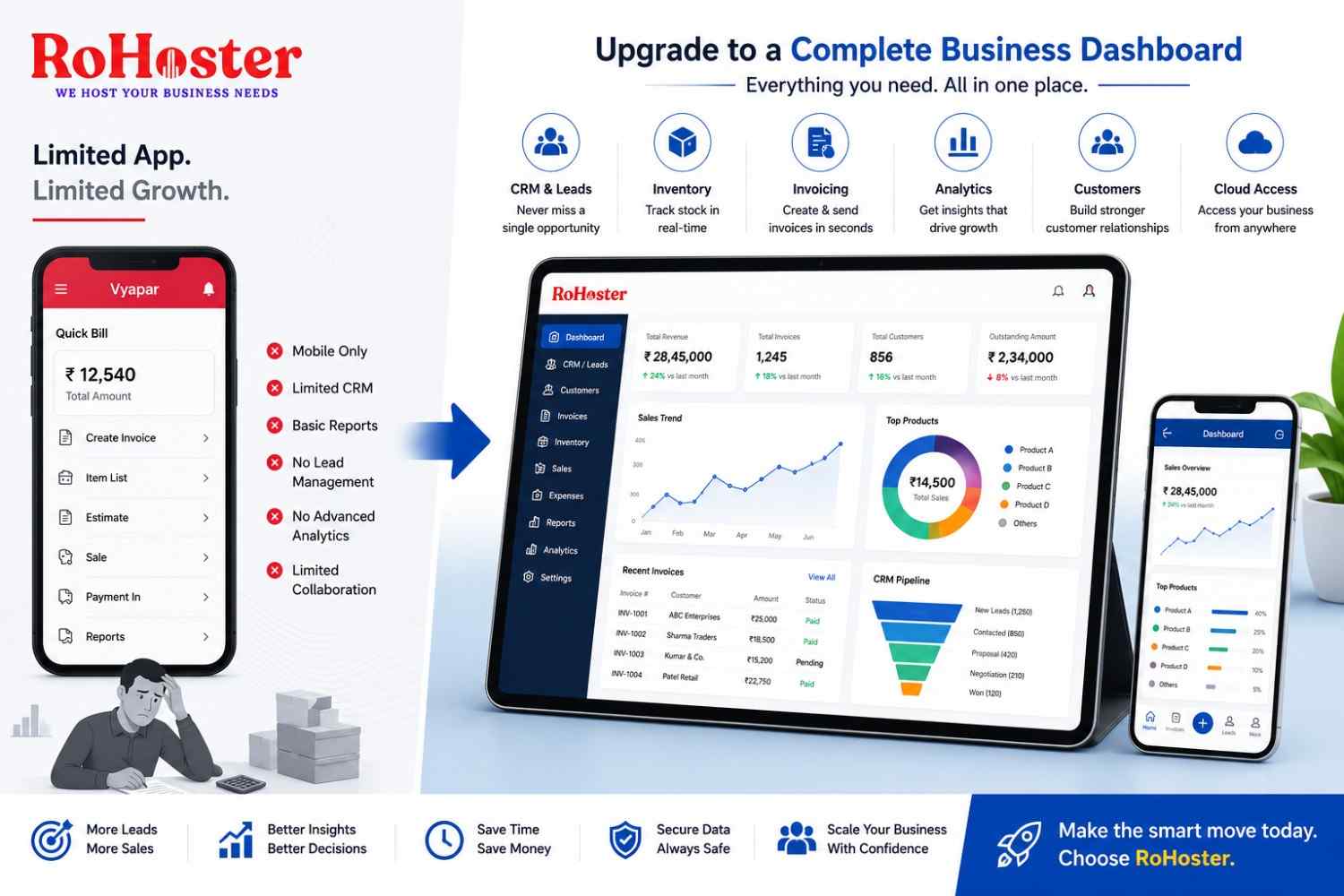
RoHoster centralizes business information into one cloud-based platform, helping SMEs review important metrics without collecting data from multiple systems.
Depending on business requirements, RoHoster can support:
GST Billing
Inventory Management
Sales Tracking
Customer Management
Lead Management
Purchase Management
Business Reports
Cash Flow Visibility
Multi-user Collaboration
Cloud Access
Instead of searching for numbers across spreadsheets and notebooks, business owners can spend more time making decisions.
Conclusion
Great businesses aren't built by checking reports once a month.
They're built through consistent attention to the numbers that drive everyday decisions.
Reviewing these fifteen metrics every week helps identify opportunities earlier, solve problems faster, and keep the business moving in the right direction.
Because businesses don't improve by accident.
They improve one informed decision at a time.
Further Reading
Want more practical insights on business reporting, automation, and operational excellence?