At the end of a busy business day, there's one question every owner wants answered:
How much did we actually make today?
The answer should be simple. But for many small businesses, closing the day's accounts means checking bills, counting cash, reviewing UPI payments, finding expense receipts, and trying to match everything manually.
A ₹500 difference somewhere in the records can lead to another round of calculations.
For small traders and service businesses handling dozens of transactions every day, this becomes both frustrating and time-consuming.
A daily sales and expense tracking app can make this process much simpler by bringing sales, expenses, payments, and cash balances together in one place.
Why Daily Business Tracking Matters
Looking only at monthly revenue doesn't tell you everything about the health of your business.
Suppose your business generated ₹30,000 in sales today.
That sounds good.
But during the same day, you may also have paid:
- ₹4,000 to a supplier
- ₹2,000 in wages
- ₹1,500 toward electricity
- ₹800 for transportation
- ₹500 for miscellaneous expenses
Your sales figure alone doesn't show the complete picture.
Tracking daily sales and expenses gives you a much clearer understanding of how money actually moves through the business.
Start With a Daily Sales Summary
The first thing a business owner should be able to see is a clear summary of the day's sales.
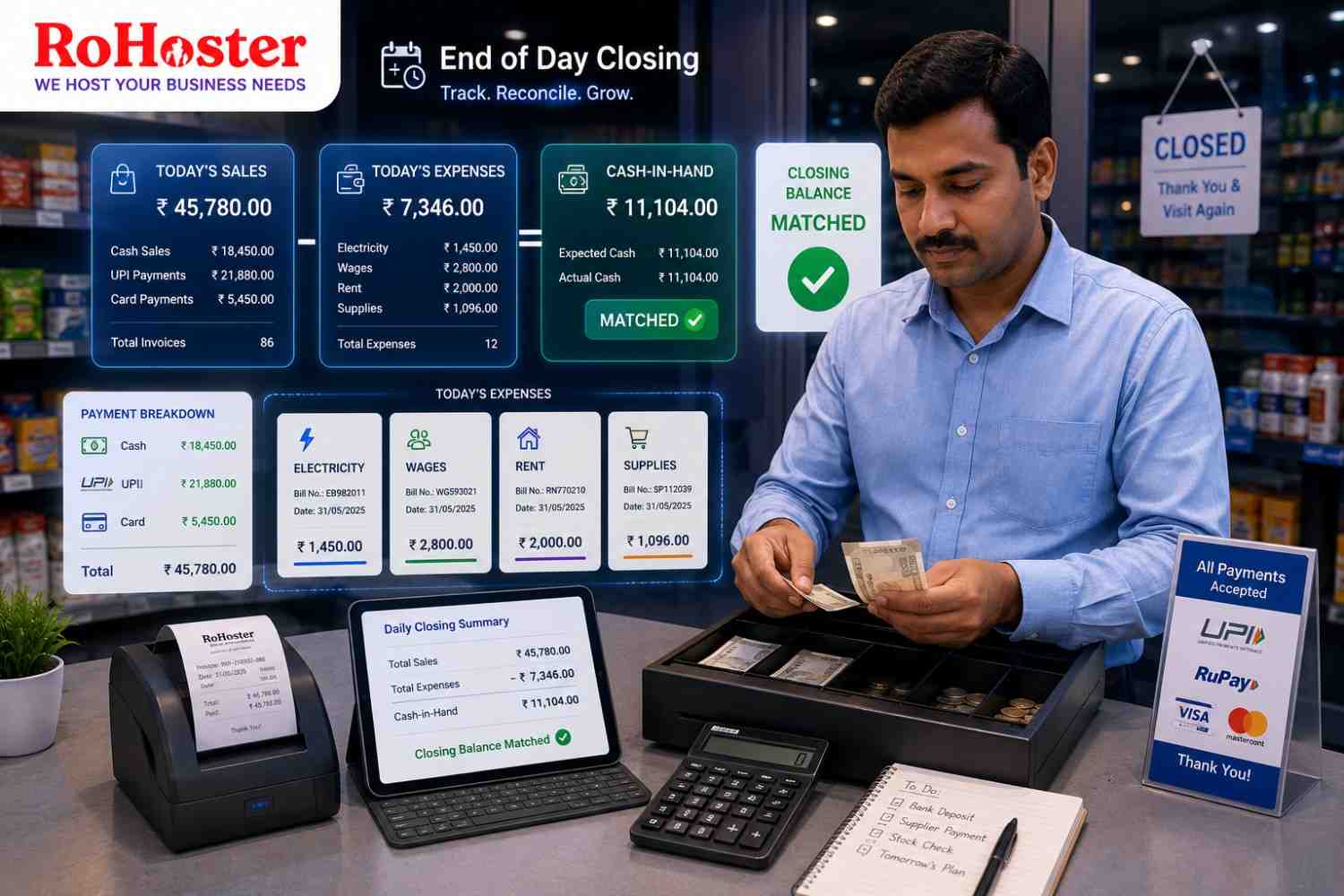
Instead of manually adding invoices, your business management software should automatically calculate information such as:
- Total sales
- Number of invoices
- Cash sales
- UPI payments
- Other digital payments
- Outstanding amounts
- Returns or adjustments
At closing time, the owner should be able to view the day's performance immediately.
No calculators. No searching through invoices.
Know Exactly How Much Cash Should Be in the Drawer
Cash reconciliation is one of the most common closing-time challenges for retailers and small businesses.
Imagine your software shows:
Cash sales today: ₹18,750
After accounting for approved cash expenses, your cash drawer should contain a specific closing amount.
If the physical cash doesn't match the expected balance, the difference can be investigated immediately.
This is much more reliable than discovering discrepancies several days or weeks later.
A good cash-in-hand tracking system creates accountability while making daily closing easier.
Separate Cash Sales From Digital Payments
Modern businesses rarely receive payments through only one method.
A customer might pay using:
- Cash
- UPI
- Bank transfer
- Card
If all payments are treated as one number, reconciling the day's accounts becomes difficult.
Your software should separate transactions by payment mode.
For example:
Total Sales: ₹45,000
Cash: ₹18,000
UPI: ₹21,000
Card/Other: ₹6,000
Now the owner knows exactly what should be physically available as cash and what should appear digitally.
Record Expenses When They Happen
One of the biggest problems with expense tracking is waiting until the end of the month.
Small expenses are easily forgotten.
Someone pays ₹350 for packaging.
Another employee spends ₹700 on transportation.
The shop pays a small repair bill.
Individually, these amounts may seem insignificant. Together, they can have a meaningful impact on profitability.
A business expense tracking software allows expenses to be recorded as they happen instead of reconstructed later from memory.
Categorize Every Business Expense
Simply recording "₹5,000 expense" isn't enough.
Businesses should know where the money went.
Expenses can be categorized into areas such as:
- Rent
- Electricity
- Wages
- Transportation
- Supplies
- Maintenance
- Marketing
- Utilities
- Miscellaneous expenses
Categorization makes it much easier to understand spending patterns.
If electricity expenses suddenly increase or transportation costs rise every month, business owners can identify the trend and investigate.
Make Daily Closing a Five-Minute Process
For many small businesses, closing accounts can take 30 minutes or longer.
A connected system can reduce that dramatically.
At the end of the day, the owner or manager simply reviews:
Today's Sales → Today's Expenses → Payment Breakdown → Expected Cash → Actual Cash
If everything matches, the day can be closed.
The system then stores the summary for future reference.
Instead of reconstructing transactions later, businesses maintain organized records every day.
Connect Billing With Sales Tracking
Daily sales tracking becomes significantly easier when billing and reporting use the same system.
Every invoice automatically contributes to the day's sales figures.
There is no need to create invoices in one application and then enter the same transactions into another spreadsheet.
Our article Generate GST Invoices in 20 Seconds: A Guide to Fast Retail Counter Billing explains how faster, integrated billing can simplify retail counter operations while automatically creating useful transaction records.
Understand the Difference Between Sales and Cash Flow
High sales don't always mean strong cash flow.
A business might generate significant revenue while simultaneously spending heavily on inventory, salaries, utilities, and other operating expenses.
That's why business owners need visibility into both money coming in and money going out.
Daily tracking makes cash movement easier to understand and helps owners avoid making decisions based solely on revenue figures.
Spot Unusual Expenses Earlier
Imagine your transportation expenses usually average ₹1,500 per day.
Suddenly, they increase to ₹3,500.
Without organized expense tracking, the increase might go unnoticed.
A digital system makes unusual patterns easier to identify.
The same applies to:
- Excessive petty cash spending
- Rising utility expenses
- Unexpected supplier payments
- Frequent miscellaneous expenses
Better visibility creates better control.
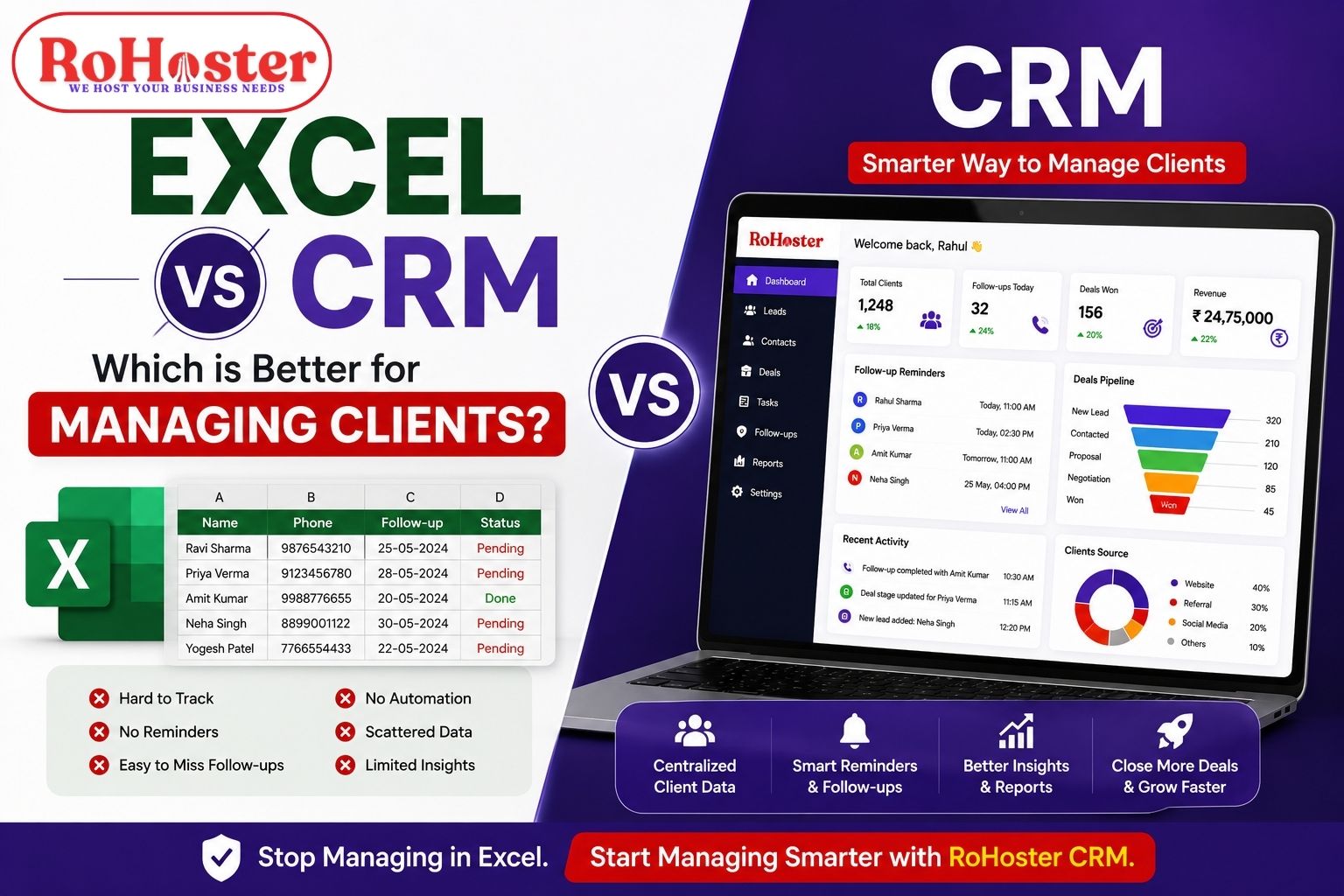
Stop Managing Everything Through Separate Spreadsheets
Many businesses maintain one spreadsheet for sales, another for expenses, and perhaps another for cash balances.
The problem is that these files don't automatically communicate with one another.
Information has to be entered repeatedly, increasing the possibility of errors.
Businesses already experiencing this problem may find our article Ditch the Spreadsheets: Why Managing Retail Stock in Excel Is Costing You Money useful. While it focuses on inventory, the same issue applies to financial operations: disconnected spreadsheets become increasingly difficult to maintain as a business grows.
Access Daily Numbers Even When You're Away
Business owners aren't always physically present at their shops or offices.
With cloud business management software, authorized owners and managers can access business information remotely.
This means you can review daily performance even when you're travelling or managing another location.
Instead of calling employees and asking, "How were today's sales?", you have the information available digitally.
Our guide Cloud vs. Desktop Software: Which is Better for Managing a Growing SME? explains why cloud-based systems provide greater flexibility for businesses that need access from multiple locations.
Use Daily Data to Make Better Monthly Decisions
Daily tracking creates something extremely valuable over time: business history.
After several weeks or months, businesses can start identifying patterns such as:
- Strongest sales days
- Weakest sales days
- Average daily expenses
- Seasonal changes
- Payment preferences
- Recurring expense increases
This makes budgeting and planning much more informed.
Instead of relying on memory, business owners can use actual operational data.
Daily Tracking Becomes Even More Important as You Grow
A business owner may personally understand every transaction when the company is very small.
That becomes harder as the business adds employees, counters, branches, or larger transaction volumes.
Centralized software for small business creates a structured system where sales and expenses are recorded consistently.
If you're beginning to digitize more areas of your operation, The Step-by-Step Guide to Digitizing Your Traditional Indian SME Operations explains how small businesses can gradually move from manual processes to connected digital systems.
How RoHoster Can Simplify Daily Business Tracking
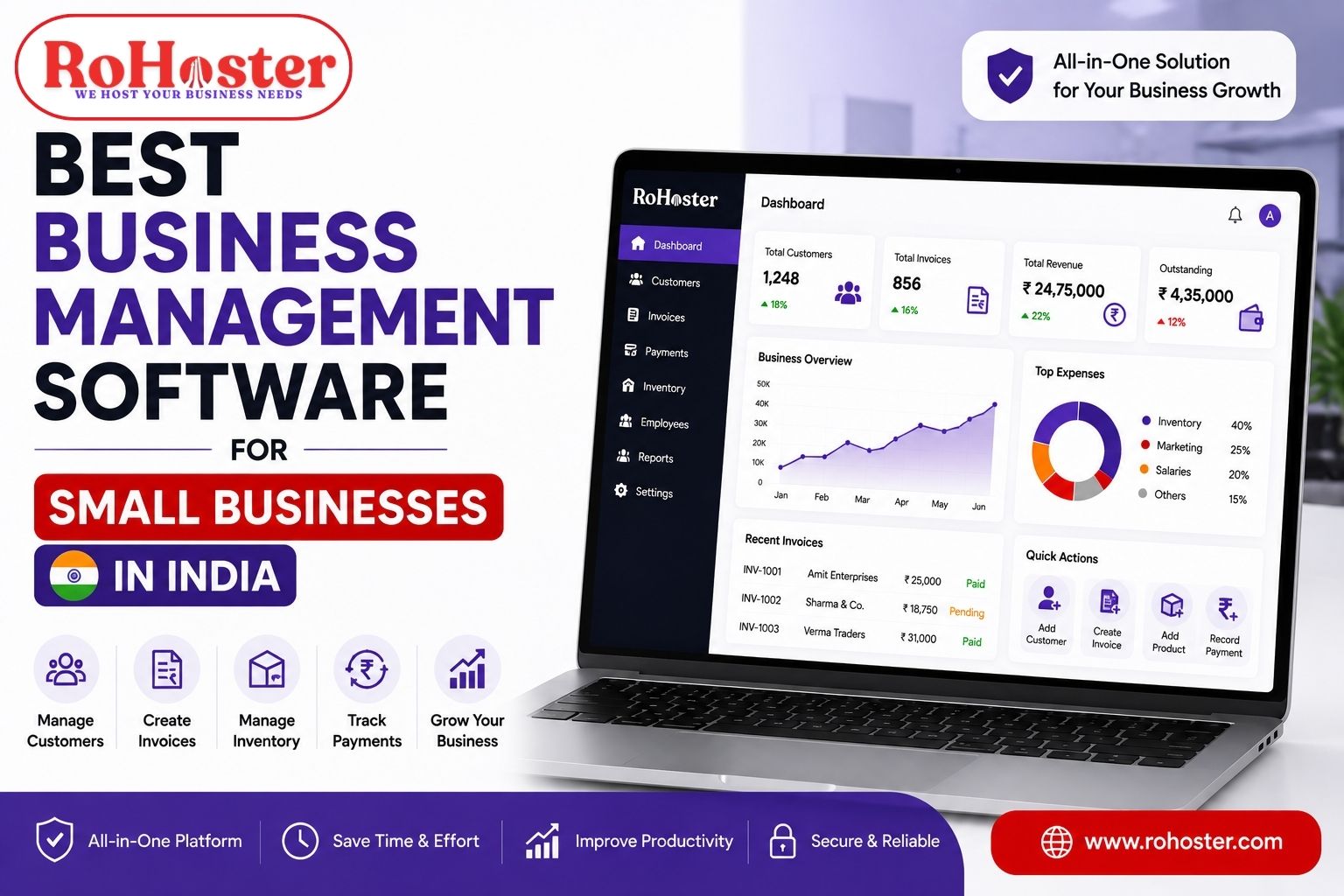
RoHoster helps businesses bring everyday operational information into one centralized environment.
Rather than relying on separate registers, spreadsheets, and disconnected applications, businesses can maintain better visibility over their day-to-day activity.
Depending on the implemented features and configuration, RoHoster can support areas such as:
- Sales records
- Billing
- Expense information
- Customer records
- Inventory
- Business reports
- Cloud-based access
The objective is simple: give business owners a clearer picture of what's happening without spending hours preparing reports manually.
Conclusion
Managing daily finances shouldn't become another job at the end of every working day.
By using a daily sales and expense tracking app, small traders and service businesses can keep sales, expenses, payment methods, and cash balances organized throughout the day.
That makes closing easier, reduces manual errors, and gives business owners a much clearer understanding of their actual financial position.
When you know what came in, what went out, and what's left, running the business becomes much easier.