Most entrepreneurs start their businesses by doing everything themselves.
Answering customer calls.
Preparing quotations.
Managing inventory.
Approving purchases.
Following up with suppliers.
Creating invoices.
Handling customer complaints.
At the beginning, this approach is necessary.
But if the business continues to depend entirely on the owner years later, growth eventually slows.
The difference between a busy business owner and a successful entrepreneur often comes down to one simple mindset:
Are you working in your business—or are you working on it?
What Does "Working In the Business" Mean?
Working in the business means handling daily operations.
Examples include:
Creating invoices
Responding to WhatsApp messages
Managing stock
Solving customer complaints
Approving payments
Following up with suppliers
These activities keep the business running.
But they rarely create long-term growth.
What Does "Working On the Business" Mean?
Working on the business means improving how the business operates.
Instead of solving today's problems, you're building systems that prevent tomorrow's problems.
Examples include:
Creating standard operating procedures
Reviewing business performance
Improving customer experience
Planning expansion
Training employees
Implementing better technology
Building stronger workflows
These activities make the business stronger every month.
Why Many Entrepreneurs Get Stuck
Owners often believe:
"Nobody can do it as well as I can."
While this may be true initially, it creates a dangerous dependency.
Every decision waits for the owner.
Every approval requires the owner.
Every customer asks for the owner.
Eventually, the owner becomes the biggest bottleneck.
Growth becomes limited—not by demand, but by capacity.
Systems Create Freedom
Businesses become easier to manage when routine work follows clear systems.
For example:
Customer Enquiry
↓
Quotation
↓
Order Confirmation
↓
Inventory Allocation
↓
Invoice
↓
Delivery
↓
Follow-up
Employees know exactly what to do.
Customers receive consistent service.
Managers spend less time solving repetitive issues.
Our article Why Successful Business Owners Spend More Time on Systems Than on Sales explains why strong systems become the foundation of sustainable growth.
Delegate Responsibilities, Not Accountability
Delegation doesn't mean losing control.
It means giving capable people the responsibility to complete defined tasks while maintaining visibility through reports and processes.
Business owners should still review performance.
But they shouldn't have to perform every task themselves.
Measure Business Health Every Week
Entrepreneurs working on their business regularly review:
Revenue
Profitability
Cash flow
Customer satisfaction
Employee productivity
Inventory movement
Outstanding payments
These numbers reveal where improvements are needed.
Our guide The Business Owner's Weekly Checklist: 15 Numbers You Should Never Ignore explains which metrics deserve regular attention.
Invest Time in Process Improvement
Every month, ask:
Which tasks are repeated frequently?
Which mistakes happen repeatedly?
Which approvals cause delays?
Which reports take too long?
Improving even one process every month creates significant long-term gains.
Our article The Hidden Cost of Poor Business Processes (And How to Fix Them Before They Hurt Your Growth) explores how small operational improvements create lasting business value.
Technology Should Support Leadership
Technology cannot replace leadership.
But it can remove unnecessary administrative work.
Cloud-based business management software helps organize information, improve collaboration, and reduce repetitive tasks.
This allows owners to spend more time making strategic decisions.
Build a Business That Doesn't Stop When You Leave
One of the strongest indicators of a healthy business is this question:
Can the business operate smoothly for a week without the owner?
If the answer is "no," the business may need stronger systems, clearer processes, and better delegation.
Building independence doesn't reduce the owner's importance.
It increases the business's resilience.
Develop Leaders, Not Just Employees
Growing businesses need people who can make decisions confidently.
Investing in employee training, clear responsibilities, and documented processes creates stronger teams.
Leadership becomes distributed rather than centralized.
Focus on Long-Term Value
Daily tasks are important.
But they shouldn't consume all your attention.
Every week, dedicate time to questions such as:
Where will the business be next year?
Which new markets can we enter?
Which processes need improvement?
Which products should we expand?
How can customer experience become better?
Growth begins with asking better questions.
How RoHoster Helps
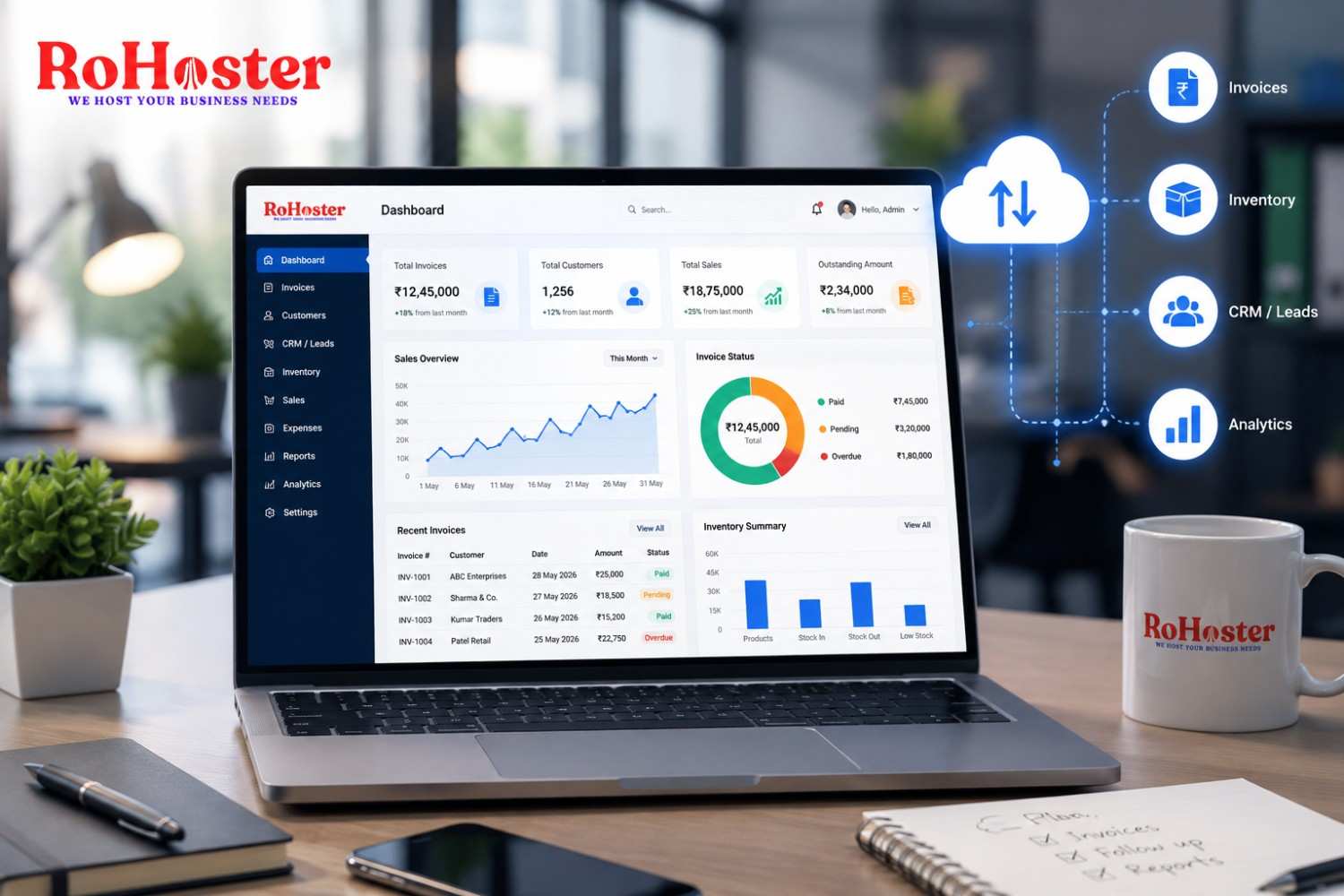
RoHoster helps SMEs organize daily operations through one centralized cloud-based platform.
Depending on business requirements, RoHoster can support:
GST Billing
Inventory Management
Customer Management
Lead Management
Purchase Management
Business Reports
Workflow Automation
Sales Tracking
Multi-user Collaboration
Cloud Access
By reducing manual coordination and organizing operational information, RoHoster helps business owners spend less time on administration and more time on strategy.
Conclusion
Every entrepreneur works hard.
But long-term success isn't determined only by effort.
It's determined by where that effort is invested.
Owners who spend every day solving operational problems often remain busy forever.
Owners who build systems, improve processes, develop teams, and plan for the future create businesses that continue growing—even when they aren't involved in every small decision.
The goal isn't simply to run the business.
It's to build a business that can thrive.
Further Reading
Want more practical insights on business leadership, automation, and sustainable growth?