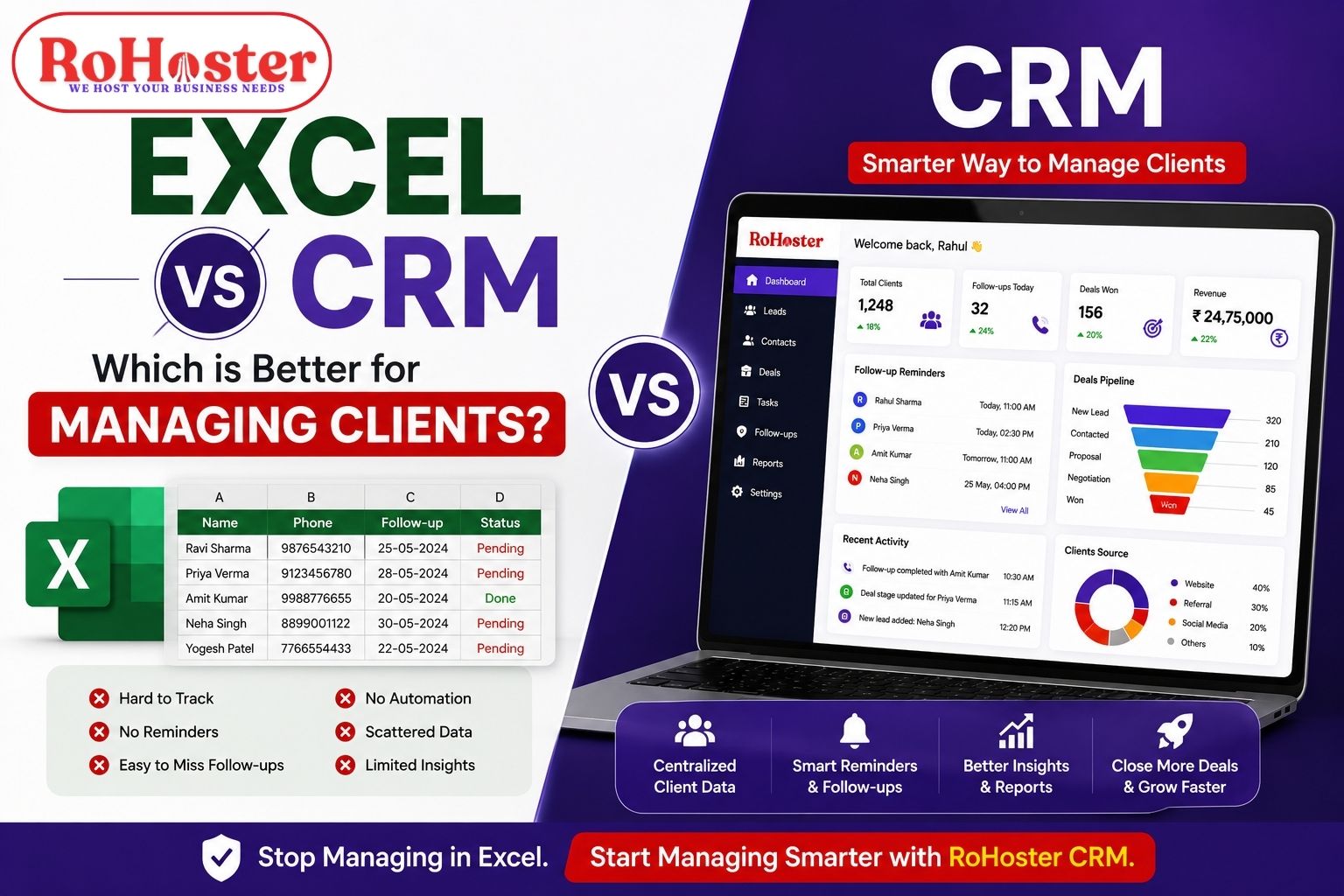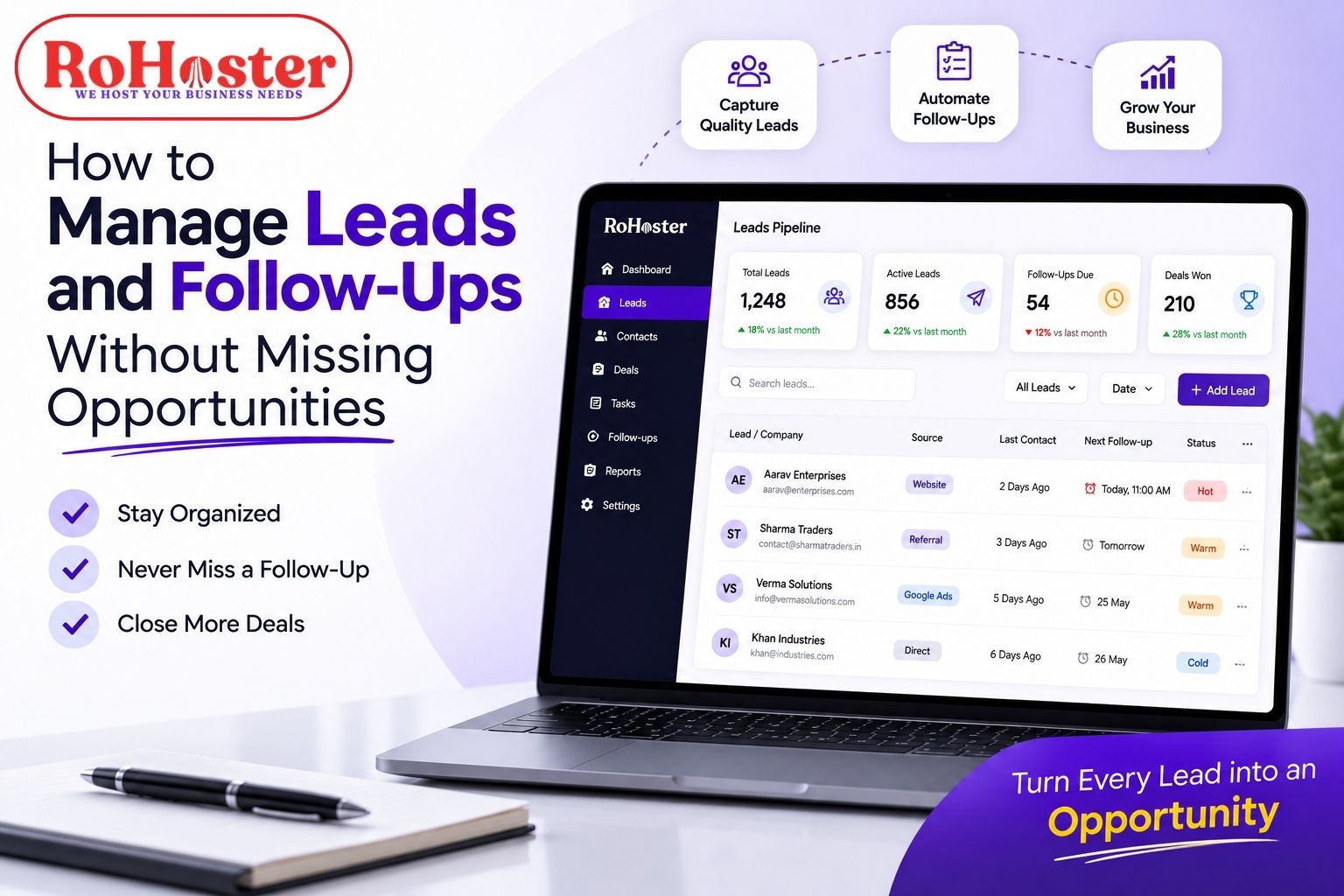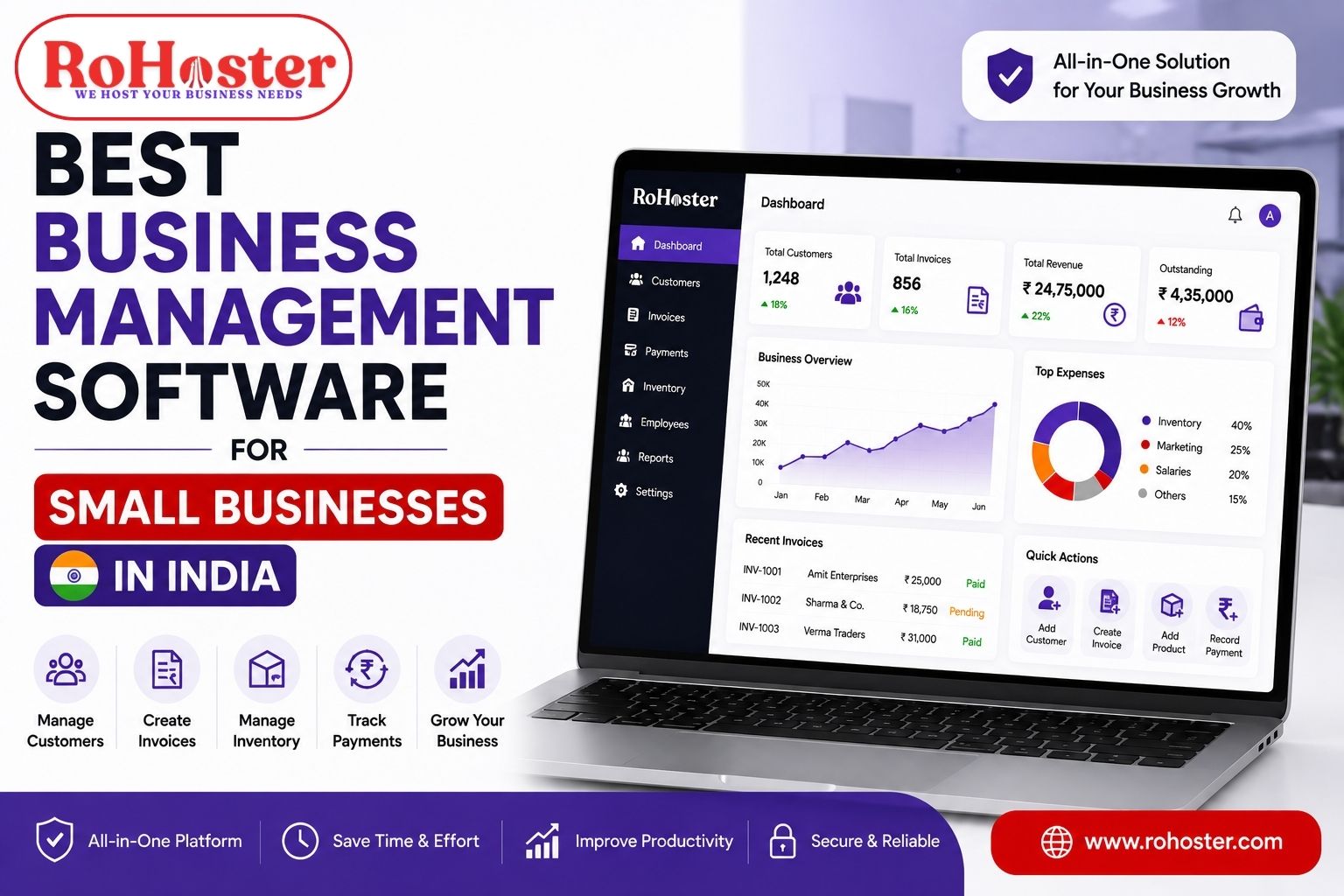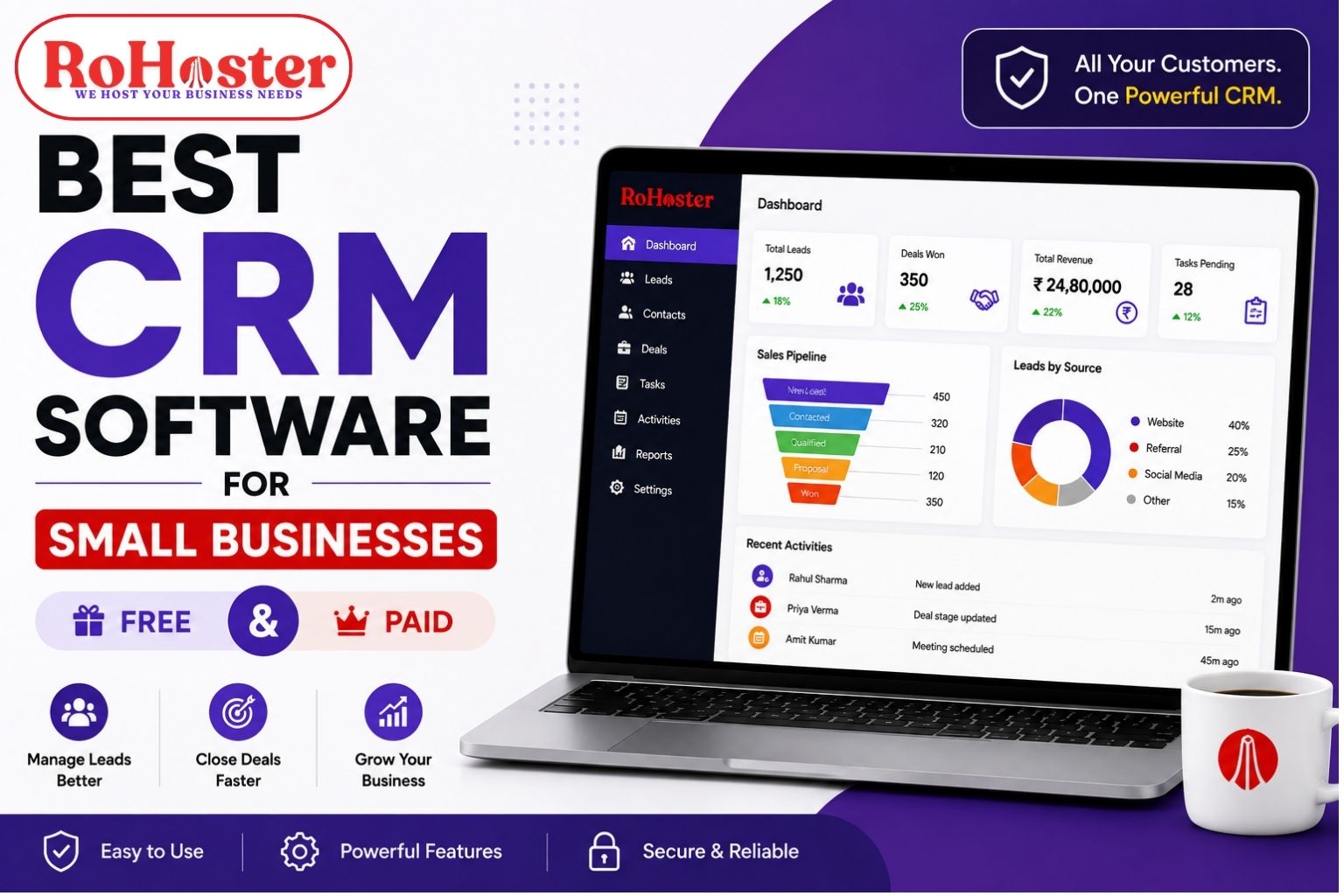
Getting enquiries feels like a win.
Someone fills out your form.
A customer sends a WhatsApp message.
Someone calls asking about your product.
A prospect requests a quotation.
But then something happens.
The customer doesn't buy.
And the business owner is left wondering:
"What went wrong?"
The problem may not be your product, pricing, or marketing.
Sometimes, you're simply losing leads somewhere between the first enquiry and the final sale.
For small businesses, every missed opportunity matters. A few lost leads every week can eventually translate into a significant amount of lost revenue.
Let's look at why it happens.
1. You're Responding Too Late
One of the simplest reasons businesses lose leads is slow response.
A potential customer makes an enquiry because they are interested right now.
If the response comes hours or days later, they may have already contacted another business.
The longer an enquiry remains unanswered, the colder it becomes.
A simple lead management process should make it clear:
Who received the enquiry?
Who is responsible for responding?
When should they follow up?
What was discussed?
Speed doesn't guarantee a sale.
But slow responses can easily lose one.
2. Your Leads Are Scattered Across Different Places
Where are your leads currently stored?
Perhaps some are in WhatsApp.
Some are in Excel.
Some are written in a notebook.
Some are saved in employees' phones.
And some exist only in someone's memory.
This makes it incredibly difficult to know how many genuine opportunities your business actually has.
A centralized lead management system gives your team one place to record and track potential customers.
3. Nobody Is Clearly Responsible for the Lead
A lead comes in.
The sales team sees it.
Everyone assumes someone else will follow up.
Nobody does.
This is surprisingly common in growing businesses.
Every lead should have clear ownership.
For example:
New Lead → Assigned to Salesperson → Follow-Up Scheduled → Status Updated
When responsibility is visible, opportunities are much less likely to disappear.
4. You're Not Following Up Consistently
A customer doesn't always buy after the first conversation.
They may need to:
Compare prices
Discuss the purchase internally
Check their budget
Speak to a partner
Wait for approval
One follow-up isn't always enough.
Yet many businesses contact a prospect once and then forget about them.
Consistent follow-up doesn't mean repeatedly messaging customers.
It means knowing when the next conversation should happen.
5. You're Treating Every Lead the Same
Not every enquiry has the same value.
One person may simply be exploring options.
Another may be ready to purchase today.
Another may be looking for a large business order.
Treating all three identically wastes sales effort.
Lead qualification helps businesses identify:
Customer requirements
Purchase intent
Budget
Timeline
Potential value
This allows sales teams to prioritize the opportunities most likely to convert.
6. Your Sales Team Doesn't Know the Customer's History
Imagine a customer speaks to one salesperson today and another tomorrow.
The second salesperson asks the same questions again.
The customer has to explain everything from the beginning.
It doesn't create a great experience.
Organized customer and lead records allow employees to see previous interactions, requirements, quotations, and follow-ups.
That continuity can make the sales process significantly smoother.
Our article The Customer Journey Every Small Business Should Master (From First Enquiry to Repeat Purchase) explains why every interaction contributes to the customer's overall experience.
7. You Don't Know Where Your Best Leads Come From
Suppose you receive:
100 leads from social media
50 from Google
20 from referrals
But only 5 social-media leads convert while 15 referral leads become customers.
If you're only counting enquiries, you might conclude that social media is your best channel.
Conversion data tells a different story.
Tracking lead sources helps businesses understand which marketing activities actually generate customers.
8. You're Not Measuring Conversion
Many businesses know how many leads they received.
They don't know how many they converted.
That's a major gap.
For example:
200 Leads
↓
140 Contacted
↓
80 Qualified
↓
40 Quotations
↓
18 Customers
This simple funnel immediately shows where opportunities are being lost.
If 200 leads are generated but only 18 become customers, the business needs to understand what happens between those stages.
9. Your Business Processes Are Not Connected
Imagine a lead finally converts.
What happens next?
Does the information have to be entered again into billing?
Does inventory need to be updated separately?
Does the accounts team need another message?
Does someone manually create the customer record?
Every disconnected step creates another opportunity for mistakes.
This is why broader business management software can be valuable for growing SMEs.
When lead management connects with customer records, sales, billing, inventory, and reporting, information can move through the business more efficiently.
Our article The Hidden Cost of Poor Business Processes (And How to Fix Them Before They Hurt Your Growth) explores how disconnected processes quietly affect business performance.
The Real Problem Isn't Always Lead Generation
Businesses often respond to poor sales by trying to generate more leads.
More advertising.
More social media.
More promotions.
More enquiries.
But what happens if the business is already losing half of its existing leads?
Generating more leads won't necessarily solve the problem.
Sometimes the better strategy is to improve what happens after the lead arrives.
Better follow-up.
Better qualification.
Better tracking.
Better customer information.
Better processes.
Build a Simple Lead Management Process
A small business doesn't need a complicated sales operation.
Start with a simple structure:
Step 1: Capture
Record every enquiry.
Step 2: Assign
Give every lead a responsible team member.
Step 3: Qualify
Understand the customer's requirement and purchase intent.
Step 4: Follow Up
Schedule the next action.
Step 5: Track
Update the lead status after every interaction.
Step 6: Convert
Once the customer purchases, move the lead into the customer journey.
Step 7: Retain
Continue the relationship after the sale.
This creates a repeatable sales process instead of relying on memory.
Don't Let WhatsApp Become Your Lead Management System
WhatsApp is useful for communicating with customers.
But it shouldn't be the only place where your sales information exists.
Important enquiries can quickly become buried under:
Group messages
Voice notes
Images
Payment confirmations
Other customer conversations
Our article Stop Running Your Business on WhatsApp: Why Informal Communication Is Costing You Money explores why growing businesses need more structured ways to manage important information.
How RoHoster Helps Businesses Manage Leads
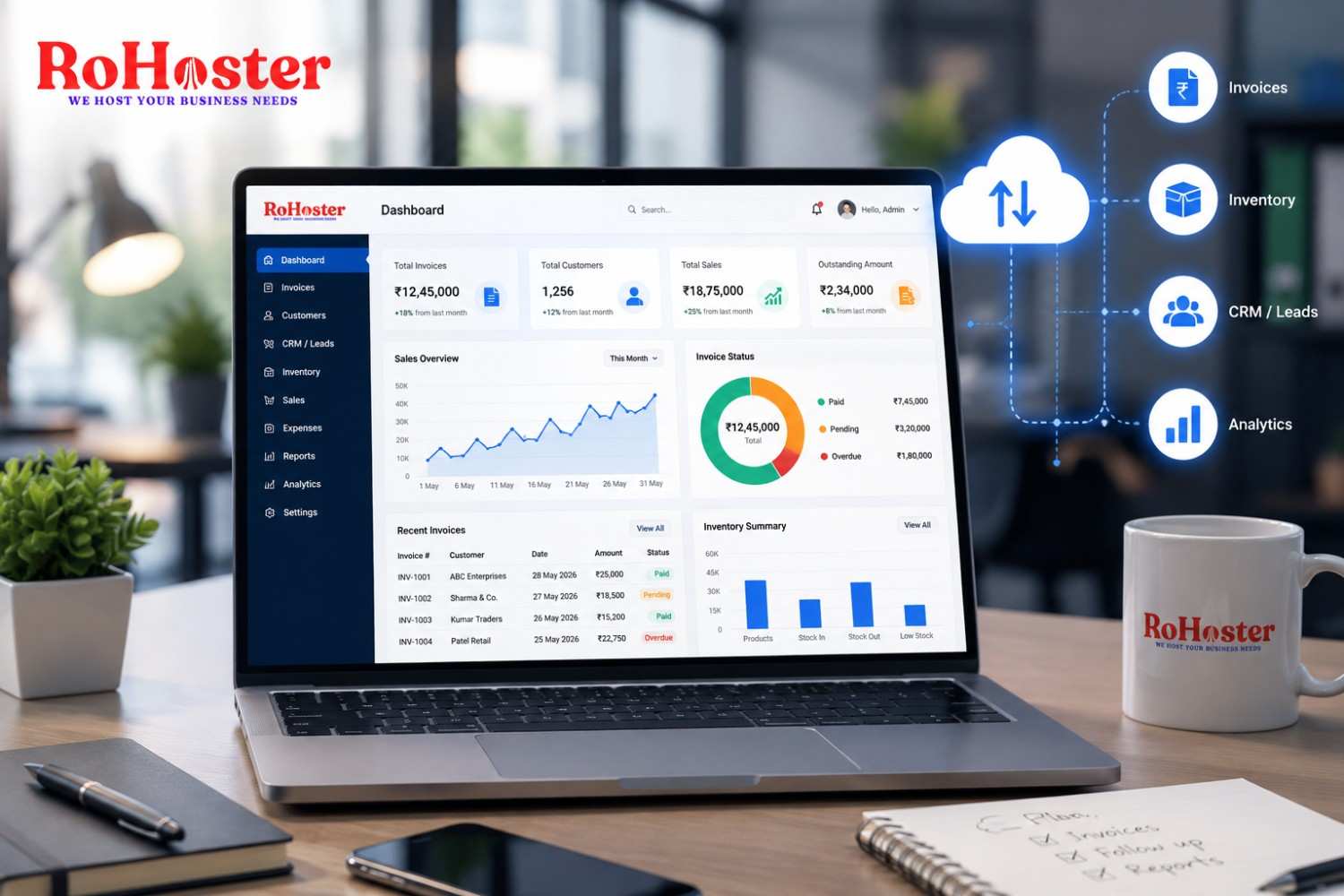
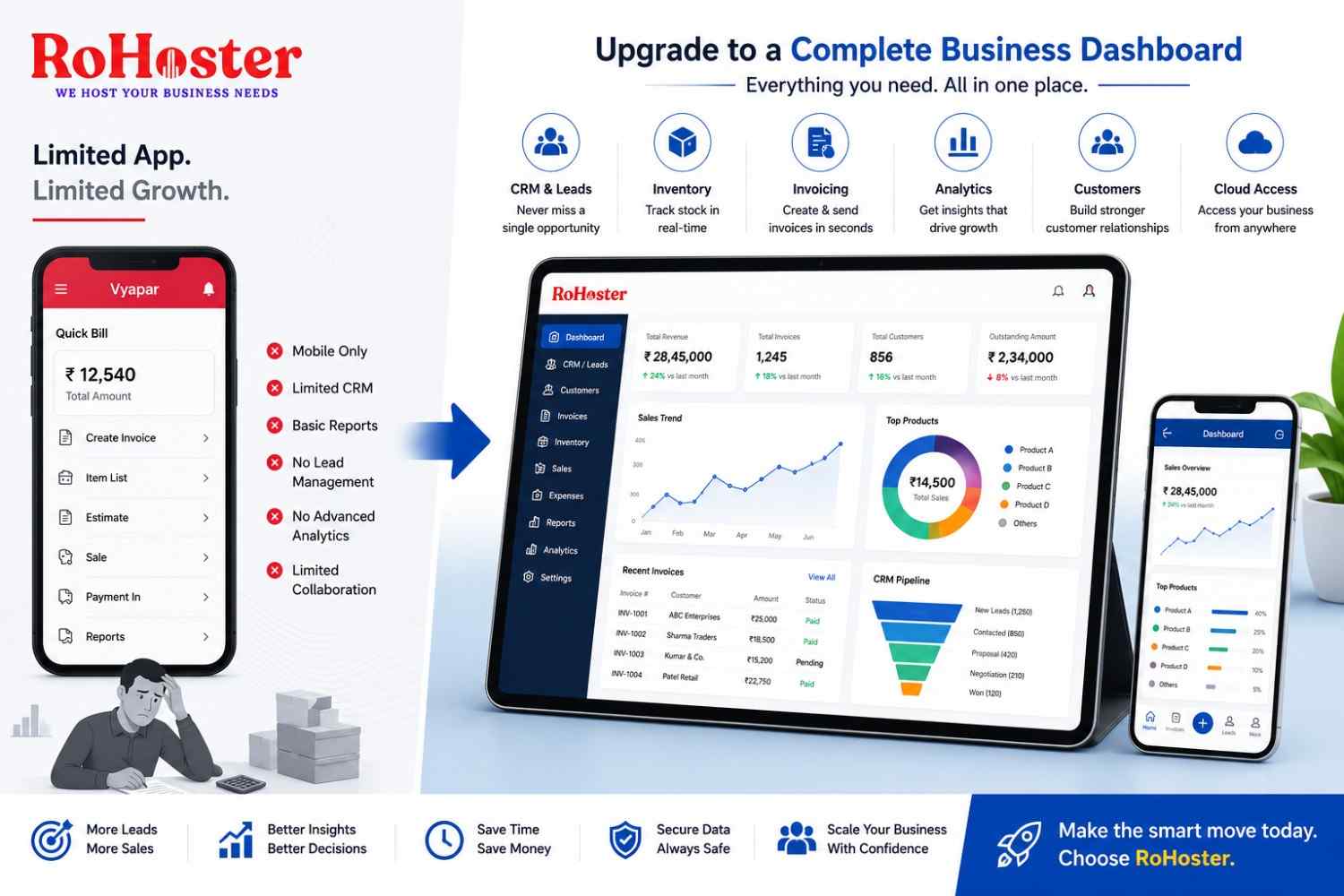
RoHoster helps small and growing businesses organize their sales opportunities through centralized lead management.
Depending on business requirements and enabled modules, RoHoster can support:
Lead Management
Customer Management
Sales Tracking
GST Billing
Inventory Management
Purchase Management
Business Reports
Workflow Automation
Cloud Access
Multi-user Collaboration
Instead of relying on notebooks, spreadsheets, scattered conversations, and memory, businesses can create a structured process for managing opportunities.
The goal isn't simply to collect more leads.
It's to make sure fewer valuable opportunities are lost.
Conclusion
If your business is generating enquiries but sales aren't growing at the same rate, don't immediately assume you need more leads.
First ask:
Where are the existing leads disappearing?
Are you responding too slowly?
Are follow-ups being missed?
Does every lead have an owner?
Can your team see previous conversations?
Do you know which sources actually convert?
Are your sales processes connected?
Fixing these gaps can turn more of the enquiries you're already generating into paying customers.
Because sometimes, the fastest way to increase sales isn't to find more leads.
It's to stop losing the ones you already have.
Further Reading
Want more practical insights on lead management, customer experience, business systems, and SME growth?
Read the latest business insights from RoHoster on LinkedIn
Stop Losing Valuable Leads
With RoHoster, organize your leads, follow-ups, customer information, sales, billing, inventory, and business reporting from one centralized cloud-based platform.
Capture every opportunity. Follow up better. Convert more.