Every business wants more customers.
But getting more enquiries doesn't automatically mean getting more sales.
A business may receive dozens of enquiries every week and still lose potential customers because someone forgot to follow up, a quotation was never sent, or an important conversation disappeared among hundreds of WhatsApp messages.
This is where lead management software becomes valuable.
Instead of treating every enquiry as another message or spreadsheet entry, businesses can create a structured process for capturing, tracking, following up, and converting potential customers.
For small businesses in particular, the right software should make selling simpler, not more complicated.
What Is Lead Management Software?
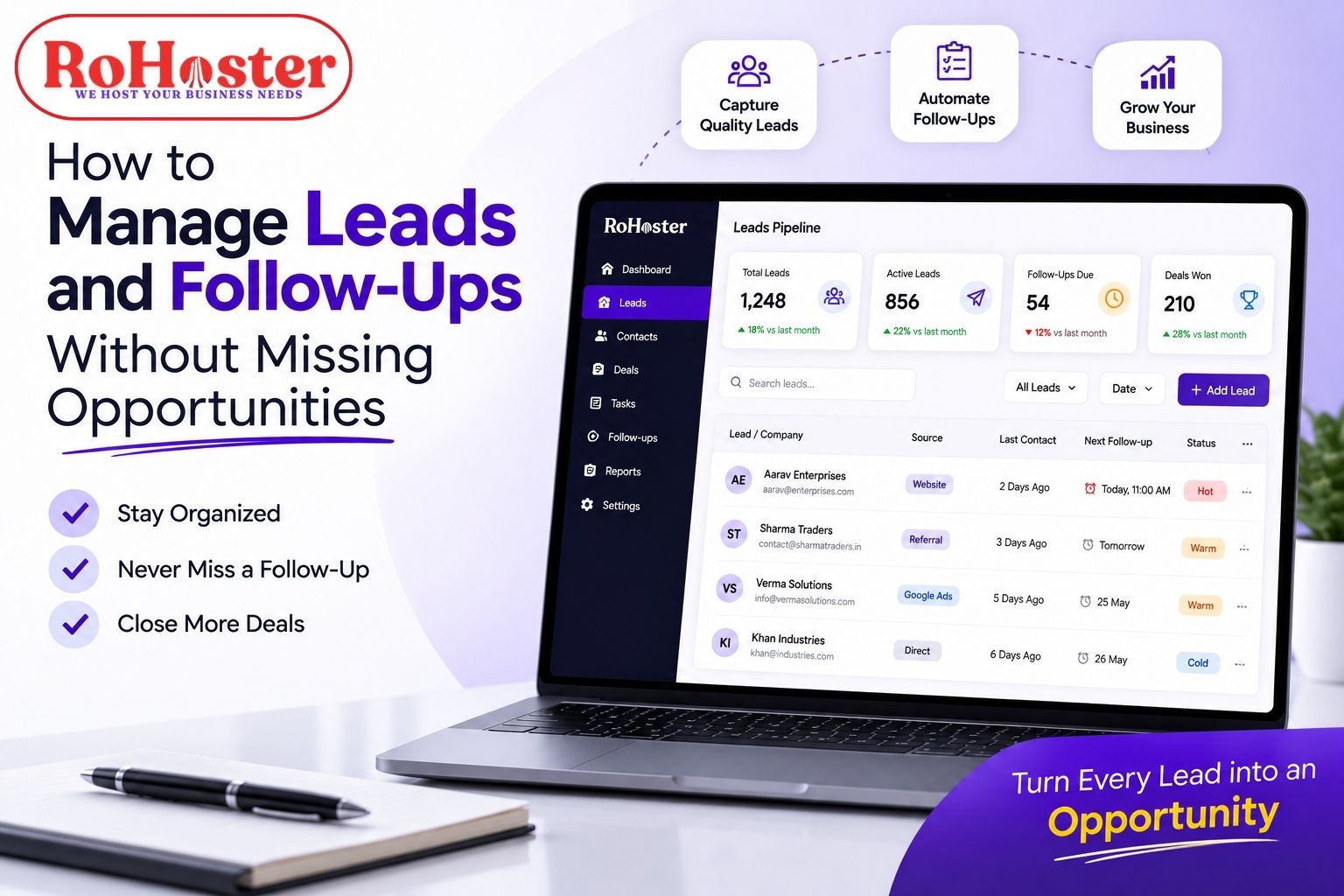
Lead management software helps businesses organize potential customers from their first interaction until they become paying customers.
A typical lead journey might look like:
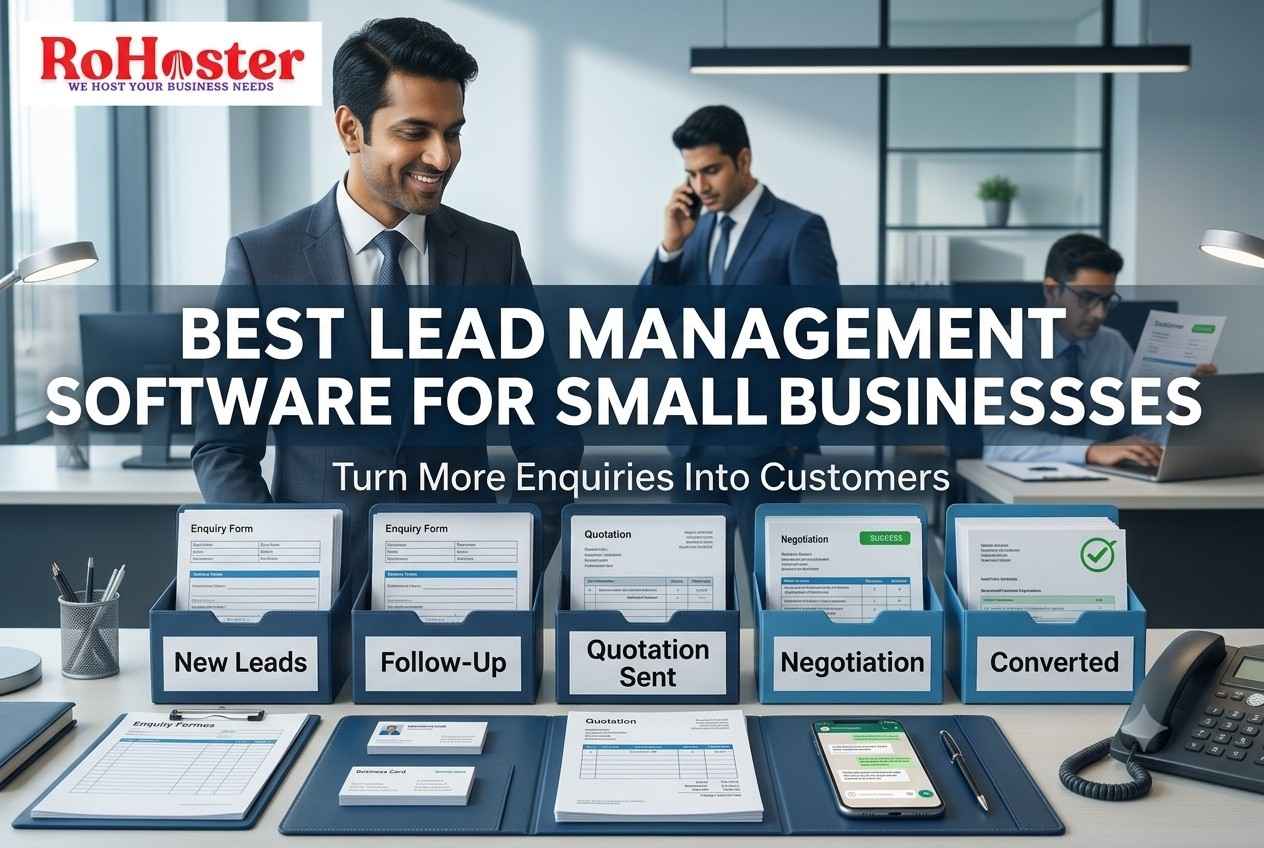
New Enquiry → Contacted → Qualified → Quotation Sent → Follow-Up → Negotiation → Converted
Instead of relying on memory, employees can see where each opportunity currently stands.
This creates visibility across the entire sales process.
Why Small Businesses Need Lead Management
Large companies often have dedicated sales teams and sophisticated systems.
Small businesses usually operate differently.
One person may handle sales.
Another may manage customer service.
The owner may personally follow up with important prospects.
As the number of enquiries increases, this informal approach becomes difficult to maintain.
Without organized lead management, businesses can experience:
Missed follow-ups
Lost enquiries
Duplicate customer records
Delayed quotations
Unclear sales responsibilities
Poor visibility into sales opportunities
A structured system helps prevent these problems before they affect revenue.
The Biggest Problem Isn't Getting Leads—It's Managing Them
Marketing can generate enquiries through:
Google
Social media
Website forms
Referrals
Phone calls
WhatsApp
Walk-in customers
But every new enquiry creates a responsibility.
Someone needs to respond.
Someone needs to understand the requirement.
Someone needs to follow up.
Someone needs to move the opportunity toward a sale.
If this process isn't organized, marketing expenditure can produce enquiries without producing enough customers.
That's why lead tracking software should be viewed as part of the sales process—not simply another database.
What Should the Best Lead Management Software Offer?
The "best" software isn't necessarily the one with the longest feature list.
For a small business, useful lead management software should be easy to understand, practical to use, and capable of growing with the business.
Here are the key features to consider.
1. Easy Lead Capture
Every enquiry should be easy to record.
The system should allow businesses to capture information such as:
Customer name
Contact details
Business name
Requirement
Source of enquiry
Assigned salesperson
Follow-up date
The easier it is to record a lead, the less likely information is to be lost.
2. Clear Lead Status
A business owner should be able to understand the sales pipeline quickly.
For example:
New Lead
↓
Contacted
↓
Qualified
↓
Quotation Sent
↓
Follow-Up
↓
Converted
Clear statuses prevent potential customers from disappearing into an unorganized list.
3. Follow-Up Management
This is one of the most important features.
A lead isn't valuable simply because it has been recorded.
It becomes valuable when the business follows up consistently.
Good software should help sales teams know:
Who needs a call today?
Which quotation is awaiting a response?
Which customer requested a callback?
Which leads have been inactive?
This turns follow-up from a memory-based activity into a repeatable process.
4. Lead Assignment
If multiple employees handle sales, every lead should have an owner.
Lead assignment helps answer:
Who is responsible for this customer?
This reduces duplication and makes accountability clearer.
5. Lead Source Tracking
Not every lead comes from the same place.
A business may receive customers through:
Website
Instagram
Google
Referrals
Advertising
Existing customers
Walk-ins
Tracking lead sources helps businesses understand which channels actually generate valuable opportunities.
6. Conversion Tracking
Generating leads isn't enough.
Businesses should know how many enquiries actually become customers.
For example:
100 Leads → 60 Contacted → 35 Qualified → 20 Quotations → 8 Customers
This gives owners a much clearer understanding of their sales process.
Follow-Up Speed Can Make or Break a Sale
Imagine two businesses receive the same enquiry.
Business A responds within ten minutes.
Business B responds two days later.
Even if Business B has the better product, the customer may already have made a decision.
Speed matters.
But speed becomes difficult when sales teams don't know which enquiries require immediate attention.
Organized lead management helps businesses prioritize follow-ups.
Don't Let WhatsApp Become Your Sales Database
WhatsApp is extremely useful for business communication.
But important customer information can easily become buried beneath hundreds of conversations.
A sales team shouldn't have to search through chat history to answer:
"What did this customer ask for last week?"
Important customer information should be stored in an organized system where authorized employees can find it quickly.
Our article Stop Running Your Business on WhatsApp: Why Informal Communication Is Costing You Money explores why relying entirely on informal conversations becomes increasingly difficult as businesses grow.
Lead Management and Customer Management Work Together
A lead is a potential customer.
Once that lead converts, the relationship shouldn't end.
The business should be able to continue managing:
Customer information
Previous purchases
Invoices
Communication
Follow-ups
Future opportunities
This creates continuity between sales and customer service.
Our article The Customer Journey Every Small Business Should Master (From First Enquiry to Repeat Purchase) explains how businesses can improve the entire journey rather than focusing only on the initial sale.
Use Customer Data to Generate More Sales
A customer who purchased once may become a valuable repeat customer.
Purchase history can reveal:
What the customer bought
When they purchased
How frequently they return
Which products they prefer
This information can support personalized follow-ups and relevant offers.
Read How Local Retailers Can Use Customer Purchase History to Drive Repeat Sales to learn how organized customer information can support retention and repeat business.
Measure Your Sales Pipeline
A good lead management system should help business owners answer questions such as:
How many new leads came this week?
How many were contacted?
How many quotations were sent?
How many opportunities are still open?
How many leads converted?
Which salesperson has the highest conversion rate?
Which source generates the most customers?
These insights turn the sales pipeline into something measurable.
Avoid Choosing Software That Is Too Complicated
One common mistake small businesses make is choosing software designed for organizations much larger than themselves.
If employees need extensive training just to record a lead, adoption becomes difficult.
The best software for small business should be intuitive enough for employees to use every day.
The objective is not to create more administration.
It is to reduce it.
Look for Software That Can Grow With You
Your business may start with one salesperson.
Later, you may have five.
You may begin with a hundred enquiries a month.
Eventually, that could become a thousand.
Your lead management system should be capable of supporting that growth.
Scalability matters because changing systems every time the business expands creates unnecessary disruption.
Lead Management Should Connect With the Rest of Your Business
Leads don't exist separately from the rest of the organization.
A converted lead becomes a customer.
The customer generates a sale.
The sale creates an invoice.
The product affects inventory.
The transaction contributes to business reports.
When these activities are connected, businesses gain a much clearer view of the entire customer lifecycle.
This is where broader business management software can become more useful than a standalone lead tracker.
How RoHoster Helps Small Businesses Manage Leads
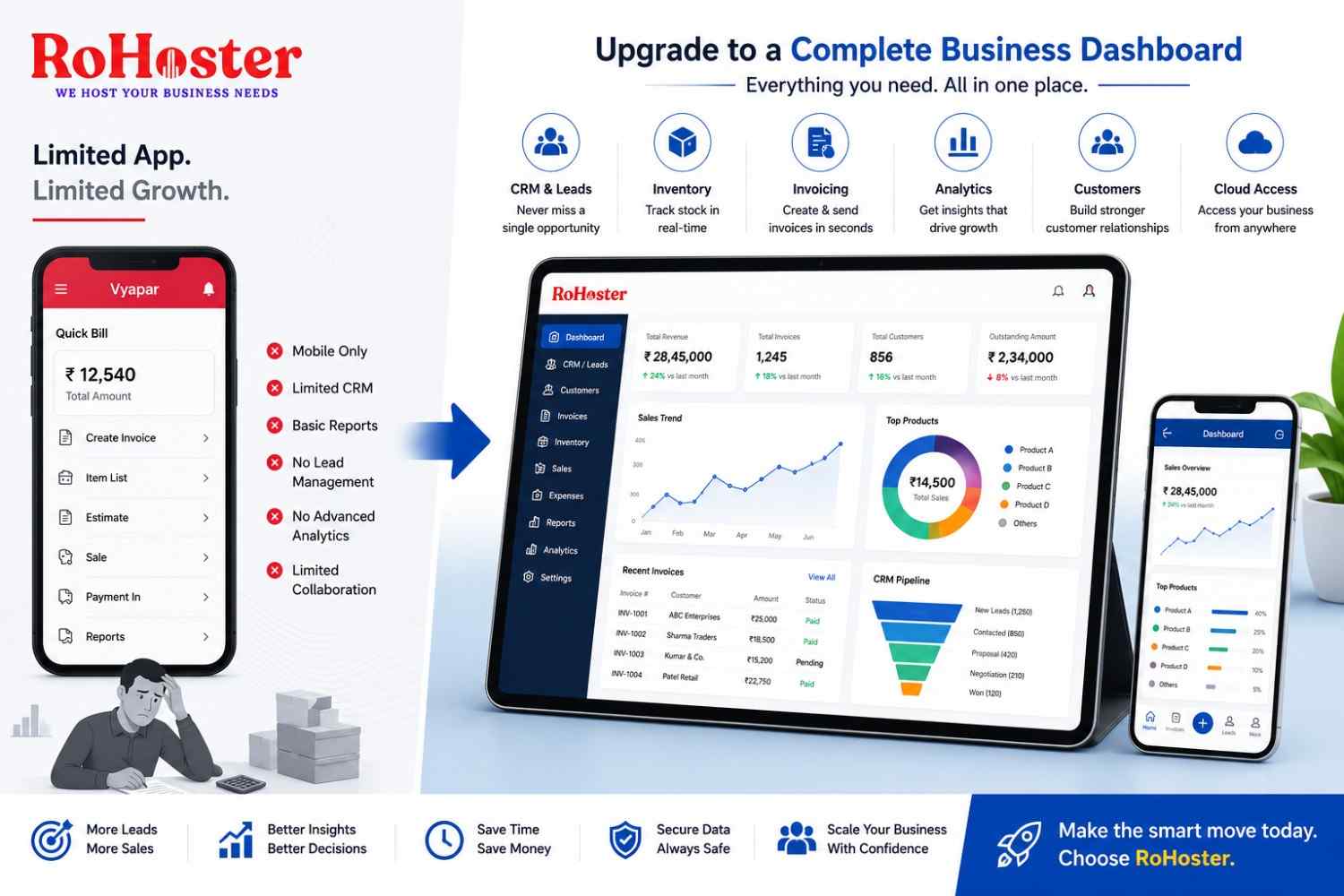
RoHoster is designed to help small and growing businesses organize their everyday operations through one centralized platform.
Depending on the business requirements and enabled modules, RoHoster can support:
Lead Management
Customer Management
GST Billing
Sales Tracking
Inventory Management
Purchase Management
Business Reports
Workflow Automation
Multi-user Collaboration
Cloud Access
Instead of maintaining leads in spreadsheets, notebooks, and scattered conversations, businesses can create a more structured sales process.
The objective isn't simply to store more customer information.
It's to help businesses follow up better, convert more opportunities, and build stronger customer relationships.
How to Choose the Right Lead Management Software
Before selecting a platform, ask these questions:
Is it easy for my team to use?
If employees don't use the system consistently, even powerful software becomes ineffective.
Can I track every lead from enquiry to conversion?
The sales journey should be visible from beginning to end.
Can I assign leads to employees?
Clear ownership improves accountability.
Can I track follow-ups?
This is essential for preventing lost opportunities.
Can it connect with other business operations?
Ideally, your sales information shouldn't remain isolated from billing, customers, inventory, and reporting.
Can it scale with my business?
The software should support growth rather than become another limitation.
Conclusion
For a small business, every customer enquiry matters.
A missed follow-up can mean a lost sale.
A forgotten quotation can mean lost revenue.
An unorganized sales pipeline can make it impossible to understand where opportunities are disappearing.
The right lead management software for small businesses creates structure around the sales process.
It helps teams capture enquiries, assign responsibility, manage follow-ups, track opportunities, and understand conversion performance.
And when lead management connects with billing, customer information, inventory, and reporting, it becomes part of a much bigger advantage:
a business that operates with clarity instead of guesswork.
Further Reading
Want more practical insights on lead management, business management software, customer relationships, and SME growth?