Choosing the right CRM can have a major impact on how efficiently a business manages leads, customers, follow-ups, and sales.
Today, Indian businesses have access to several CRM platforms, ranging from lightweight solutions for small teams to highly customizable enterprise systems. Two names that businesses may come across are RoHoster and Zoho CRM.
But these platforms are positioned somewhat differently.
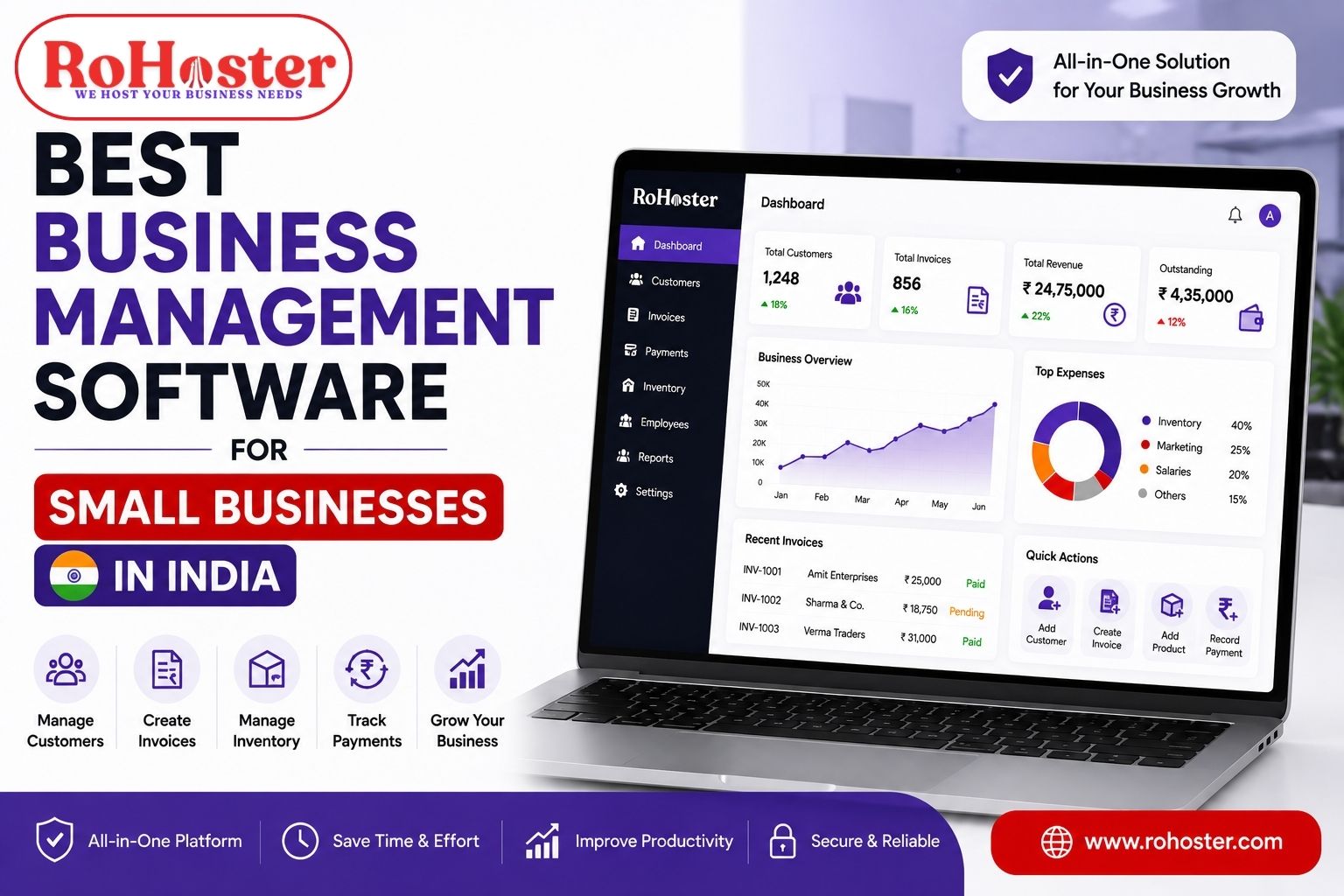
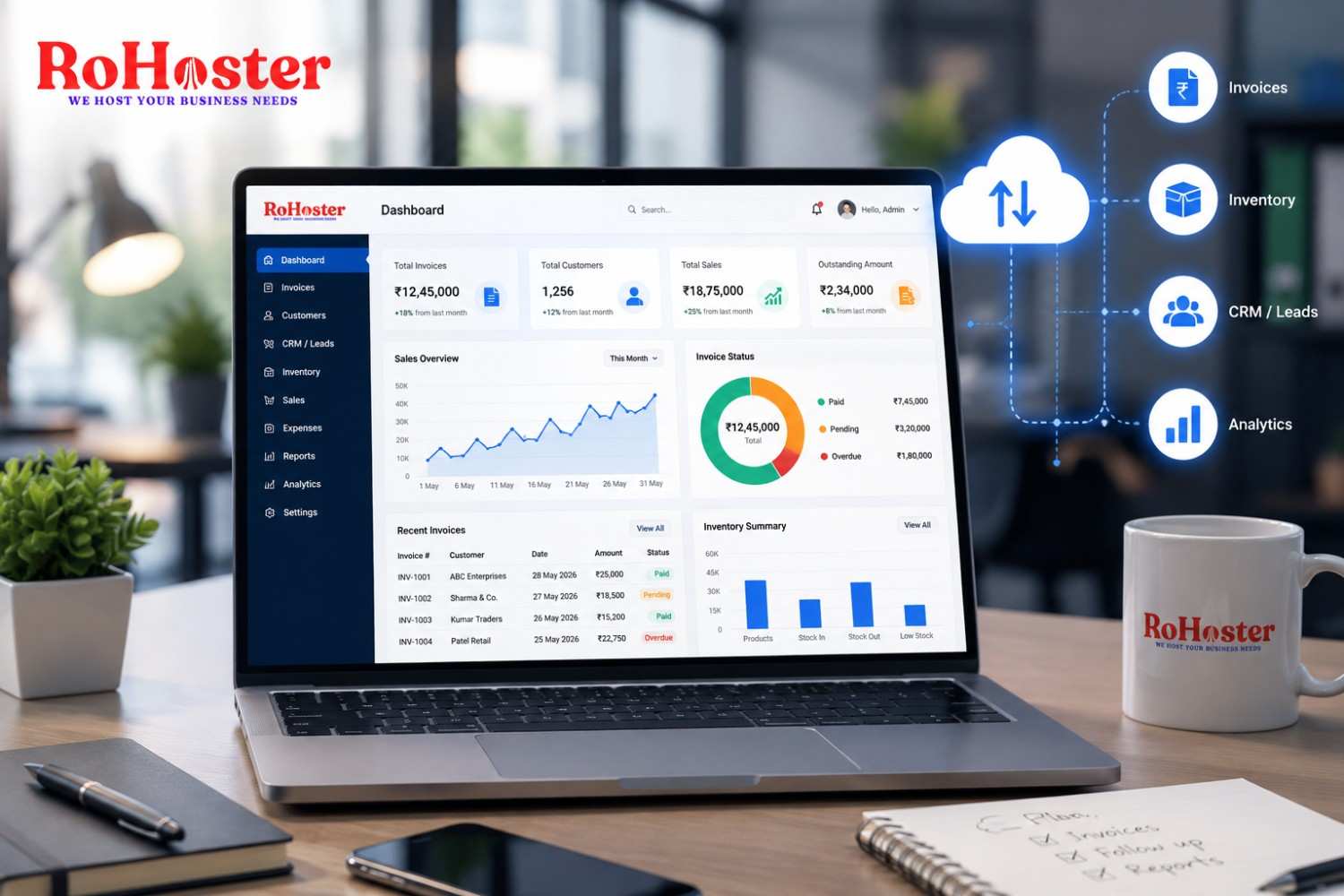
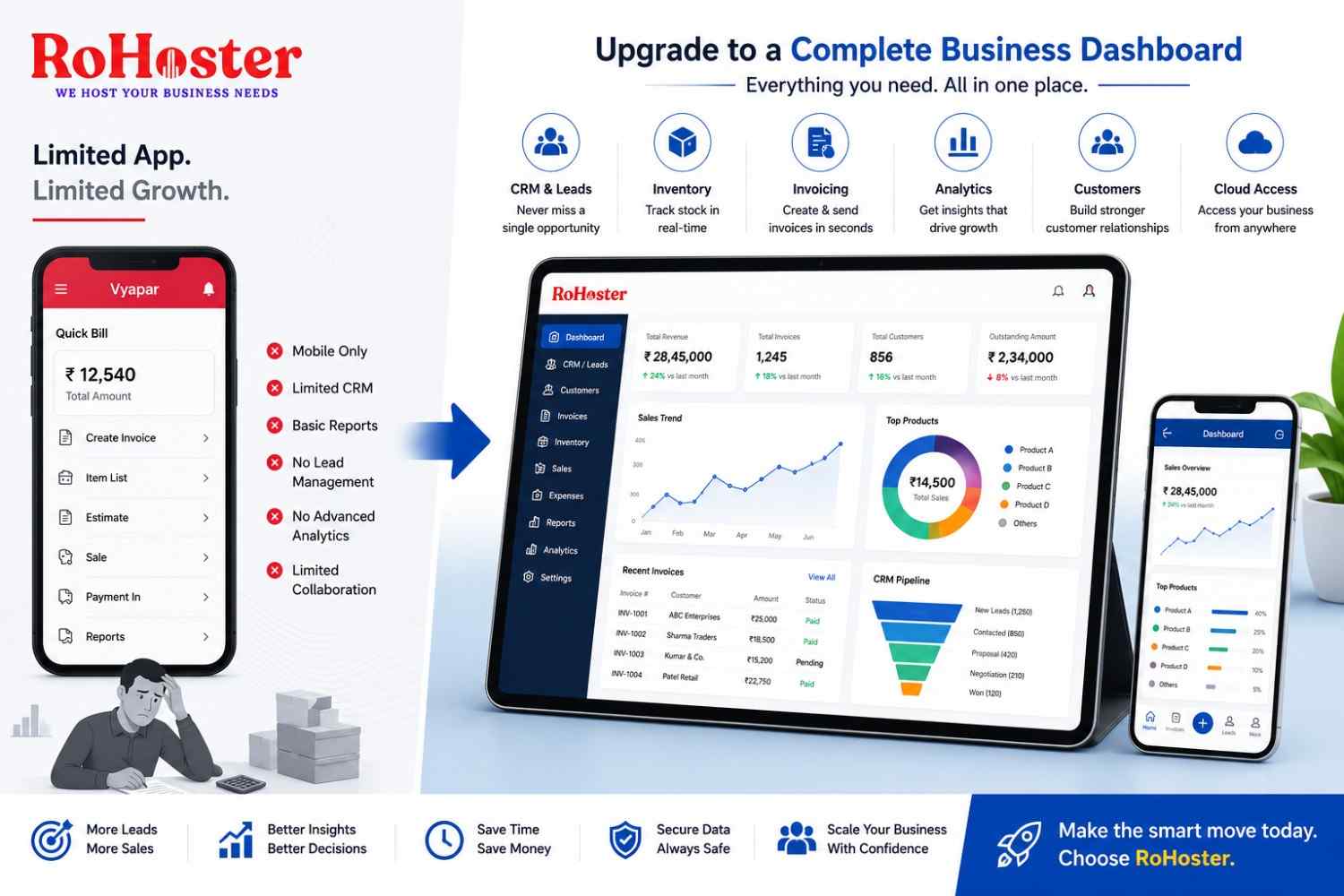
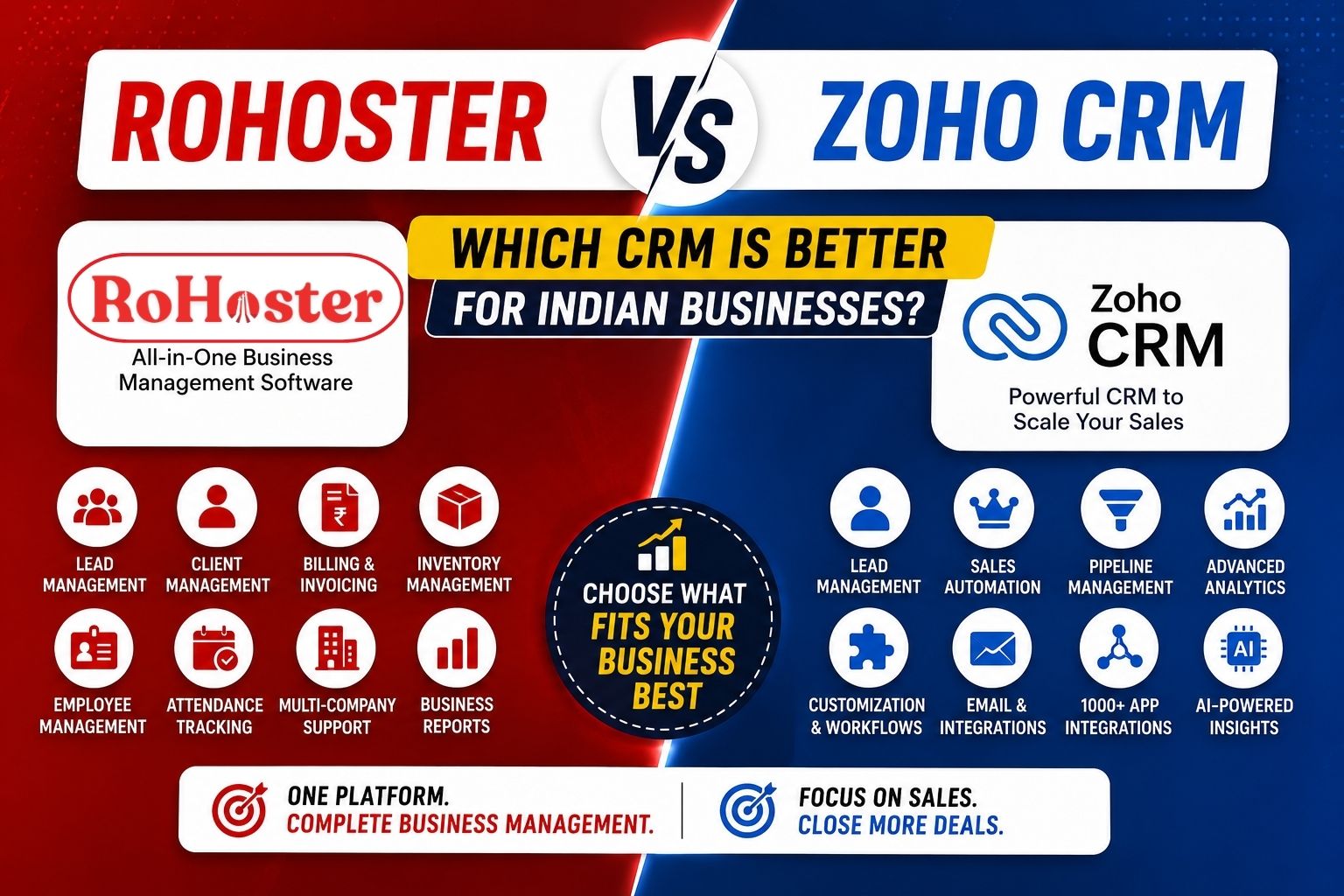
RoHoster positions itself as an all-in-one business management platform for growing Indian businesses, bringing leads, clients, billing, inventory, employees, attendance, and other business operations together.
Zoho CRM is primarily a CRM and sales platform, with extensive sales automation, customization, integrations, analytics, AI capabilities, and multiple editions for different organizational needs.
So, RoHoster vs Zoho CRM—which one should a business choose?
The answer depends on what you actually want your software to manage.
Also Read: 10 Signs Your Business Has Outgrown Excel | When to Upgrade Your Business Software
RoHoster vs Zoho CRM at a Glance
| Feature | RoHoster | Zoho CRM |
|---|---|---|
| Lead Management | ✓ | ✓ |
| Client Management | ✓ | ✓ |
| Follow-Up Management | ✓ | ✓ |
| Sales Management | ✓ | ✓ |
| Billing / Invoicing | ✓ | Available depending on edition/ecosystem |
| Inventory Management | ✓ | Available in Professional and above |
| Employee Management | ✓ | Primarily CRM-focused |
| Attendance | ✓ | Not a core CRM function |
| Multi-Company / Branch Operations | ✓ | Depends on configuration/ecosystem |
| Business Management | Core focus | Primarily CRM |
| Sales Automation | ✓ | ✓ |
| Advanced CRM Customization | Growing | Extensive |
| AI Capabilities | Evolving | Extensive |
| Third-Party Integrations | Available | 1,000+ integrations advertised |
| Best Fit | Growing SMEs wanting one business system | Businesses needing a sophisticated CRM/sales platform |
Zoho's current CRM documentation lists lead/contact/deal tracking across editions, while more advanced capabilities such as inventory management, CPQ, predictive intelligence and expanded process management are available in higher editions.
What Is RoHoster?
RoHoster is positioned as an all-in-one business management software for growing Indian businesses.
Rather than focusing only on customer relationship management, RoHoster brings multiple operational functions into one workspace.
These include:
- Lead Management
- Client Management
- Billing Management
- Inventory Management
- Employee Management
- Attendance
- Multi-Company Support
- Business Reports
Its positioning is particularly relevant for SMEs that do not want to manage different applications for every business function.
The core idea is simple:
Manage more of your business from one system.
RoHoster's website currently describes the platform as bringing leads, clients, billing, inventory, and teams into one workspace.
What Is Zoho CRM?
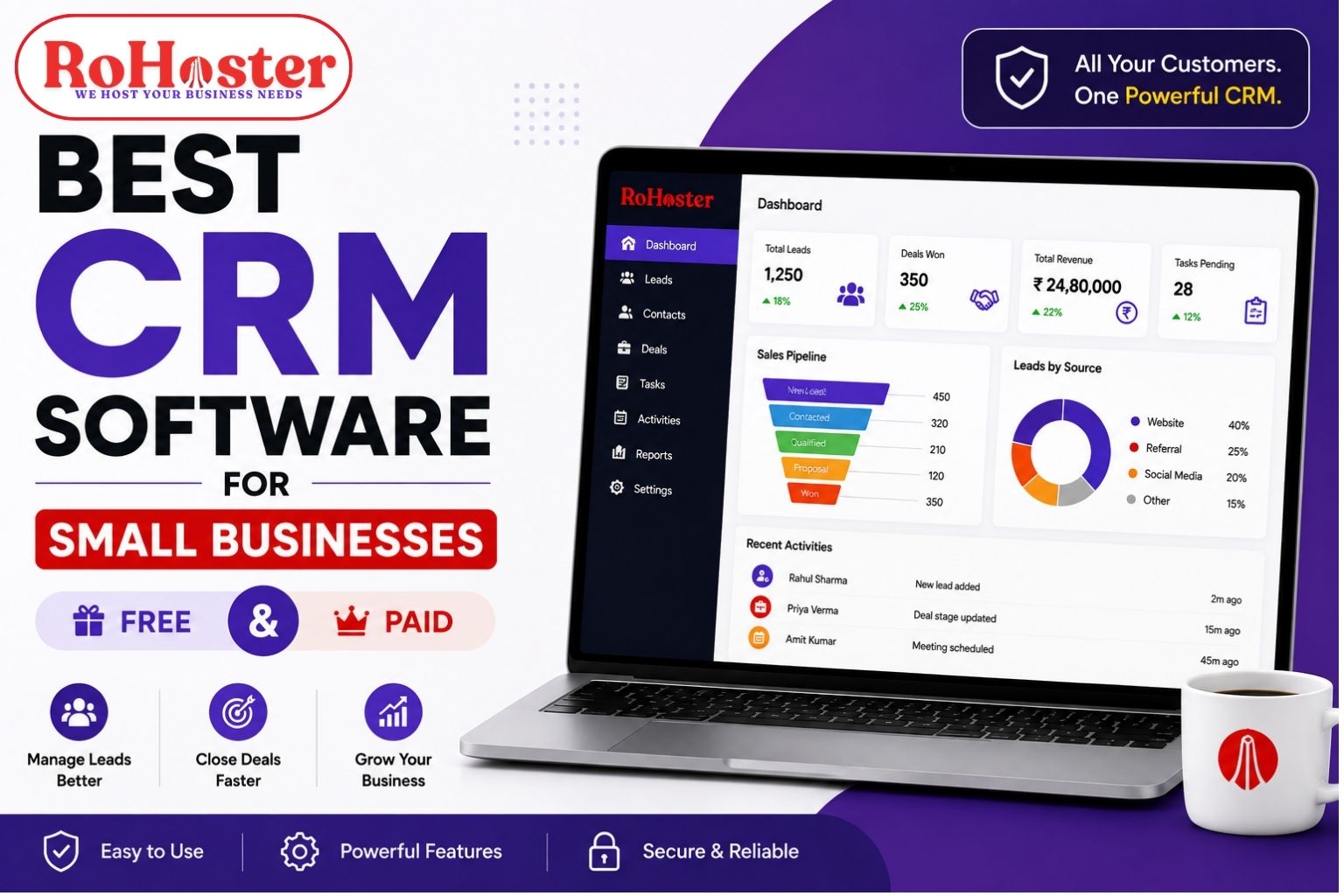
Zoho CRM is a dedicated customer relationship management platform designed to help businesses manage their sales and customer lifecycle.
It provides features such as:
- Lead Management
- Contact Management
- Deal Management
- Sales Pipelines
- Workflow Automation
- Sales Forecasting
- Reports
- Email Integration
- Custom Modules
- Process Management
- AI-powered capabilities
- Inventory management in higher editions
Zoho CRM also supports extensive customization and integrations, and Zoho says its CRM integrates with more than 1,000 applications.
This makes Zoho CRM a strong option for organizations looking for a mature and highly configurable CRM ecosystem.
1. CRM vs All-in-One Business Management
This is the biggest difference between RoHoster and Zoho CRM.
RoHoster
RoHoster is designed around the broader concept of business management.
The objective is to bring:
Leads + Clients + Billing + Inventory + Employees + Operations
into one platform.
Zoho CRM
Zoho CRM is primarily centered around:
Leads + Contacts + Deals + Sales + Customer Relationships
with extensive automation and customization.
Zoho also offers other products and ecosystem components for businesses that need functions beyond CRM.
The Difference
If your primary requirement is a sophisticated CRM, Zoho CRM may be the more natural fit.
If your requirement is:
"I want one system to manage more of my day-to-day business operations."
then RoHoster's broader business-management approach may be more relevant.
2. Lead Management
Both platforms provide lead management capabilities.
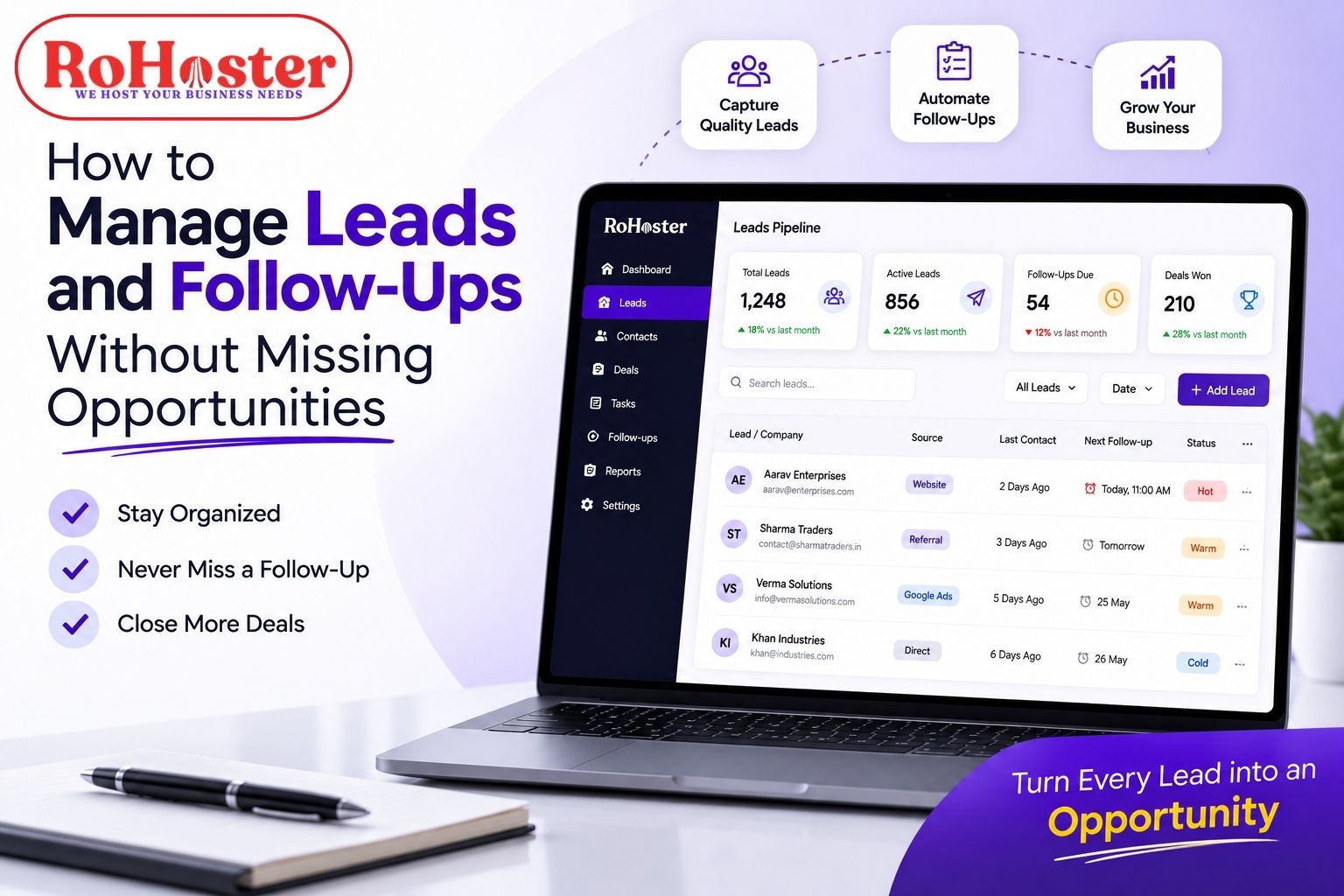
RoHoster allows businesses to capture and organize leads, manage follow-ups, and move prospects toward conversion as part of its broader business-management platform.
Zoho CRM provides more mature sales automation capabilities, including lead management, workflows, sales pipelines, follow-up reminders, and advanced sales processes depending on the edition.
For businesses that need advanced sales automation and complex CRM processes, Zoho has a significant depth advantage.
For SMEs looking for lead management as part of a broader business platform, RoHoster provides a more integrated operational approach.
3. Client Management
Customer and client information is central to both platforms.
RoHoster provides centralized client records with service and transaction information as part of its broader business management system.
Zoho CRM provides detailed contact and account management, allowing businesses to maintain customer information, interactions, deals, activities, and other CRM-related data.
The difference again comes down to scope.
RoHoster: Client management + wider business operations.
Zoho CRM: Deep customer relationship and sales management.
4. Billing and Invoicing
This is an important area for Indian SMEs.
Many small businesses do not want to manage customer relationships in one application and billing in another.
RoHoster includes invoice management as part of its broader business-management platform.
Zoho has billing capabilities across its broader ecosystem, and Zoho CRM's Professional edition includes inventory management along with sales-related capabilities. Zoho also offers dedicated billing products with GST-compliant invoicing and other billing functions.
Therefore, businesses should consider whether they want:
One integrated business platform
or
A CRM connected to a broader suite of specialized applications.
5. Inventory Management
Inventory is another important differentiator.
RoHoster includes inventory management as a core part of its all-in-one platform, including branch-wise inventory functionality.
Zoho CRM also supports inventory management, but according to its current edition information, it is included from the Professional edition onward.
For businesses where inventory is a core daily activity, it is worth evaluating how deeply inventory is integrated with the rest of the business workflow.
6. Employee and Attendance Management
This is an area where the platforms have different priorities.
RoHoster includes employee management and staff attendance as part of its business-management offering.
Zoho CRM, on the other hand, is primarily a customer relationship and sales platform.
Businesses looking for employee-focused functionality within the broader Zoho ecosystem may need to consider other Zoho applications rather than expecting everything to be part of CRM itself.
This distinction matters for SMEs that want a single system for both customer-facing and internal business operations.
7. Customization
Zoho CRM has a strong advantage when it comes to advanced CRM customization.
Its current editions support custom modules, custom fields, workflows, process management, custom functions, portals, and other advanced customization options depending on the edition.
This makes Zoho particularly suitable for businesses with complex sales processes and detailed CRM requirements.
RoHoster takes a simpler business-management approach, with the goal of making multiple business operations accessible through one platform.
For a small business, simplicity can sometimes be more valuable than having hundreds of configuration options.
8. Ease of Use
For SMEs, software adoption is extremely important.
A CRM can have hundreds of features, but if employees find it difficult to use, adoption can become a challenge.
RoHoster's positioning focuses on giving growing businesses a single workspace for important operations.
Zoho CRM offers significantly deeper customization and automation, which can be powerful but may require more configuration depending on the organization's requirements.
Therefore:
Choose simplicity when:
You want your team to start quickly and manage core business operations.
Choose deeper customization when:
You have complex workflows and dedicated resources for CRM configuration.
9. Pricing and Total Cost
Price is an important factor for Indian SMEs, but the total cost of ownership matters more than the headline subscription price.
Zoho CRM uses edition- and user-based pricing. Its current India pricing page lists paid CRM editions such as Standard and Professional, with pricing varying by edition and billing arrangement; taxes are additional.
Zoho also has a free CRM edition for up to three users, according to its current pricing information.
When comparing the two platforms, businesses should look beyond the monthly subscription and consider:
- Number of users
- Required edition
- Additional applications
- Integrations
- Customization
- Implementation
- Training
- Support
- Billing and inventory requirements
A cheaper CRM can become more expensive if you need several additional applications to manage the rest of your business.
10. Which One Is Better for Indian SMEs?
There is no universal answer.
It depends on your business.
RoHoster May Be Better If You Want:
- An all-in-one business management platform
- Lead and client management
- Billing and invoicing
- Inventory management
- Employee management
- Attendance
- Multi-company or branch management
- A simpler operational workflow
- One platform for multiple business functions
RoHoster specifically positions itself around growing Indian businesses and combines these functions in one platform.
Zoho CRM May Be Better If You Want:
- A mature dedicated CRM
- Advanced sales automation
- Complex sales processes
- Extensive customization
- Advanced reporting
- AI-powered CRM capabilities
- Large numbers of integrations
- A broader enterprise CRM ecosystem
Zoho CRM currently offers advanced automation, AI agents, predictive intelligence, CPQ, custom portals and extensive customization in its higher editions.
RoHoster vs Zoho CRM: The Simple Difference
If we simplify the entire comparison into one sentence:
Zoho CRM is primarily a powerful CRM platform.
RoHoster is an all-in-one business management platform with CRM capabilities.
That distinction is important.
A business that needs a highly sophisticated sales CRM may naturally lean toward Zoho CRM.
A business that wants to manage leads, clients, billing, inventory, employees, attendance, and other operations together may find RoHoster's approach more relevant.
Which CRM Should a Small Business Choose?
Before choosing any CRM, ask yourself:
Do I only need CRM?
If yes, compare dedicated CRM platforms based on your sales requirements.
Do I need CRM + billing + inventory + employee management?
Then an all-in-one business management platform may be worth considering.
Do I need advanced automation and customization?
A mature CRM such as Zoho CRM may be better suited.
Do I want a simpler system for my growing SME?
A simpler, integrated platform may provide better adoption.
Do I want to minimize the number of software tools?
An all-in-one approach can help reduce the need to connect multiple systems.
Final Verdict: RoHoster vs Zoho CRM
Both RoHoster and Zoho CRM can be useful, but they solve slightly different problems.
Zoho CRM is a strong choice for businesses that need a sophisticated CRM with advanced automation, customization, integrations, analytics, and AI capabilities.
RoHoster is positioned for businesses that want to go beyond CRM and manage more of their day-to-day business operations from one platform—including leads, clients, billing, inventory, employees, attendance, and business reporting.
So the better question is not:
"Which software is better?"
It is:
"Which software is better for the way my business operates?"
For a business looking for a powerful, highly configurable CRM, Zoho CRM is worth evaluating.
For an Indian SME looking for a simple, integrated business management system, RoHoster is worth considering.
Ultimately, the right choice is the platform that solves your actual business problems without adding unnecessary complexity.
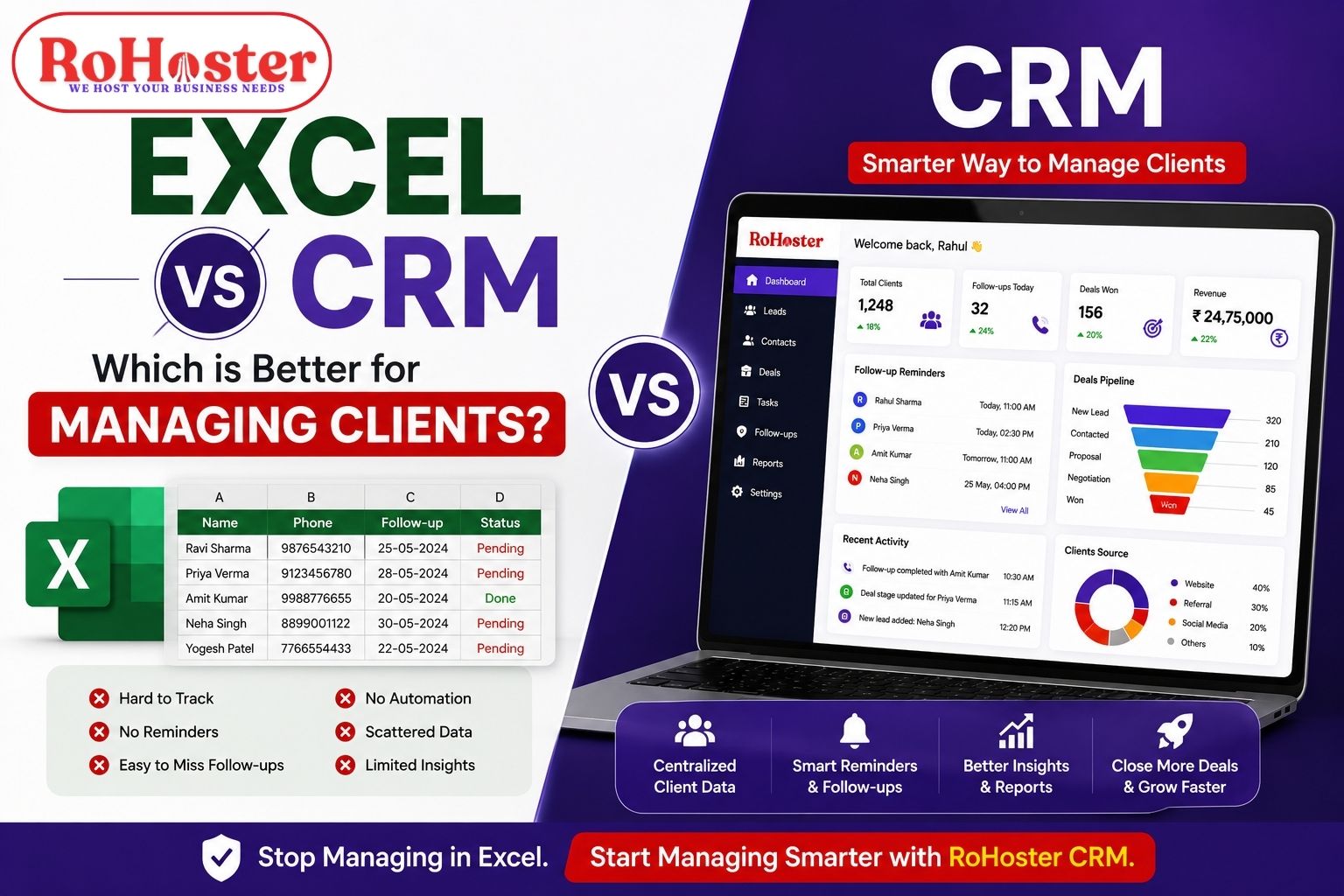
Also Read: Excel vs CRM – Which is Better for Managing Clients?