For generations, the red khata has been a familiar sight at Indian kirana stores, hardware shops, wholesalers, and local businesses.
A trusted customer buys something today and promises to pay later. The shopkeeper writes the amount beside their name, and business continues.
The system is simple—and built on relationships.
But as the number of customers grows, managing udhaar manually becomes increasingly difficult.
Who owes ₹500? Who hasn't paid for two months? How much credit has already been given to a particular customer? When was the last payment made?
A digital udhaar tracking system helps answer these questions without changing the trust-based relationship that makes local businesses unique.
Why Traditional Udhaar Tracking Becomes Difficult
A physical khata works well when you have a small number of regular customers.
But imagine maintaining credit records for 100, 300, or even 1,000 customers.
The business owner has to remember:
- Current outstanding balance
- Previous payments
- New purchases
- Payment due dates
- Credit limits
- Customer promises
Information can easily become difficult to track.
And when records aren't clear, collecting payments becomes even harder.
The Real Problem Isn't Giving Credit
Customer credit isn't necessarily bad for business.
For many retailers and suppliers, it can help build long-term relationships and encourage repeat purchases.
The real problem is uncontrolled credit.
If customers continue purchasing without settling previous balances, a business may generate strong sales on paper while struggling with actual cash availability.
That creates a dangerous gap between revenue and cash flow.
Digitizing customer credit gives owners greater control over that gap.
Create a Digital Account for Every Customer
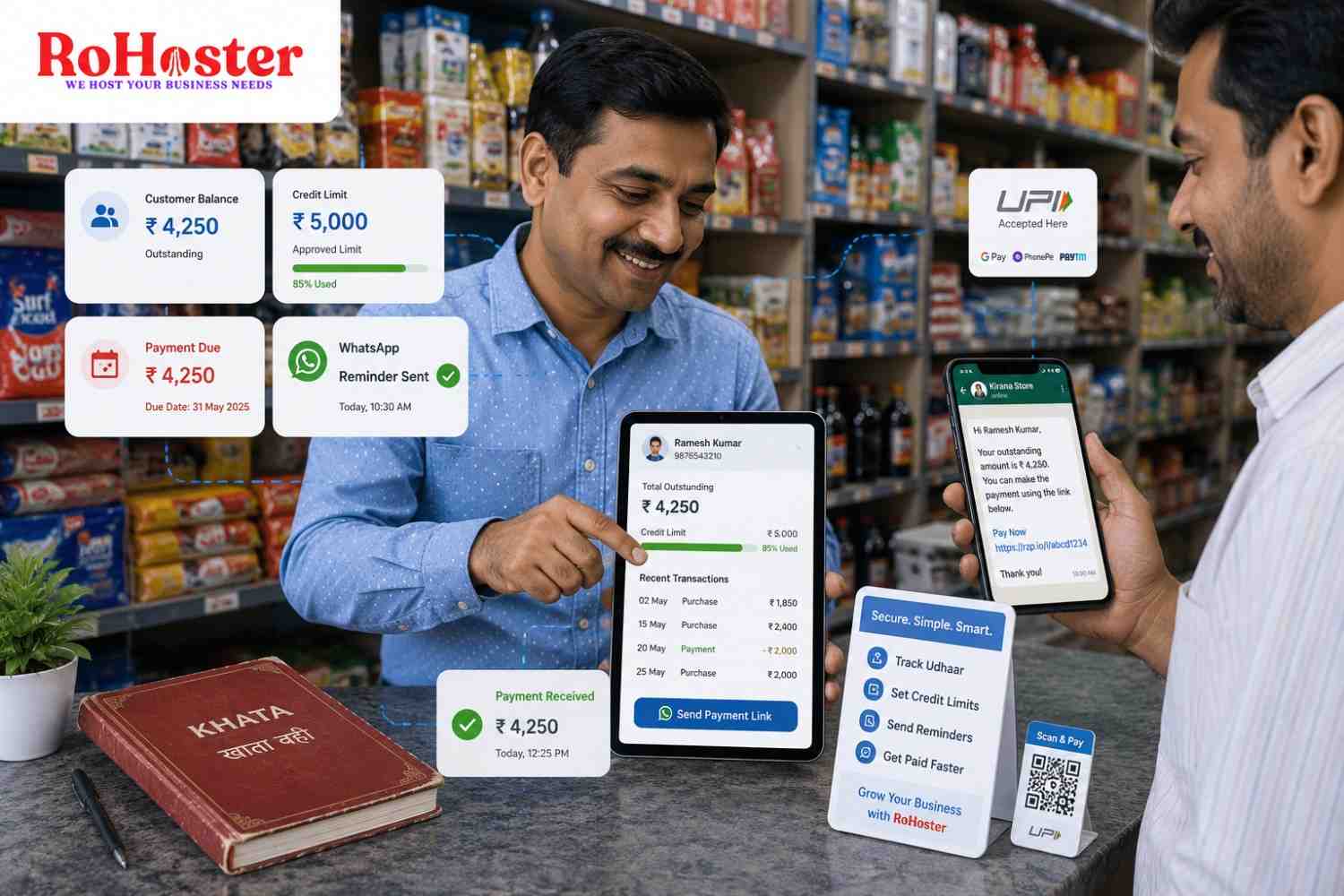
Instead of maintaining handwritten pages, businesses can create individual digital customer accounts.
Each customer record can contain:
- Name
- Contact information
- Purchases
- Credit transactions
- Payments received
- Outstanding balance
- Payment history
Whenever a customer makes a credit purchase, the amount is added to their account.
Whenever they pay, the balance is updated.
This creates a clear transaction history without searching through pages of old notebooks.
Know Exactly How Much Every Customer Owes
One of the biggest benefits of digital udhaar management is immediate visibility.
Suppose a customer asks:
"Bhaiya, mera kitna baaki hai?"
Instead of opening a register and manually adding several entries, the shop owner can check the current balance instantly.
The customer can also be shown a clear record of purchases and payments.
That transparency can reduce misunderstandings and make payment conversations easier.
Set a Credit Limit for Every Customer
Not every customer should necessarily receive the same amount of credit.
A long-standing customer with a strong payment history might comfortably receive a higher limit.
A newer customer may require a smaller one.
A digital customer credit management system can help businesses maintain predefined credit limits.
For example:
Customer A
Credit Limit: ₹10,000
Outstanding: ₹6,500
Available Credit: ₹3,500
If another credit purchase would exceed the limit, the business can review it before approving the transaction.
This turns credit management from guesswork into a structured business process.
Prevent Udhaar From Growing Silently
The biggest danger with handwritten credit records is that outstanding amounts can accumulate gradually.
₹500 becomes ₹1,200.
₹1,200 becomes ₹3,000.
Eventually, the owner realizes that a significant amount of working capital is stuck with customers.
Digital tracking allows businesses to monitor total receivables regularly rather than discovering the problem at the end of the month.
Your business management software should make it easy to see how much money is currently outstanding across customers.
Make Payment Reminders Friendly, Not Awkward
Asking customers for payment can sometimes feel uncomfortable—especially when they are regular customers.
Digital reminders make the process more professional.
Instead of repeatedly calling customers, businesses can send a simple WhatsApp message such as:
Hi Rajesh, your outstanding balance is ₹2,450. You can complete the payment using the link below. Thank you.
The tone remains polite while the payment requirement stays clear.
Businesses can also send reminders closer to agreed payment dates rather than waiting until balances become overdue.
Send Payment Links Directly Through WhatsApp
A reminder becomes much more effective when the customer can act immediately.
Instead of saying:
"Please visit the shop and clear your balance."
you can provide a digital payment option.
The customer receives the reminder, opens the payment link, and completes the transaction.
Once payment is recorded, the outstanding balance can be updated accordingly.
This reduces friction between payment reminder and payment collection.
Keep a Clear Payment History
Customers don't always clear their entire outstanding amount at once.
Someone may owe ₹8,000 and pay ₹3,000 today.
A digital system can record:
Previous Outstanding: ₹8,000
Payment Received: ₹3,000
Remaining Balance: ₹5,000
Maintaining this history makes future reconciliation much easier for both the business and the customer.
Connect Customer Credit With Daily Cash Flow
Udhaar shouldn't be managed separately from the rest of your business finances.
Suppose your store records ₹60,000 in sales today, but ₹20,000 of those sales were made on credit.
Your actual cash inflow is very different from your total sales.
Understanding this distinction is essential for managing working capital.
Our article Track Daily Sales, Cash-in-Hand, and Business Expenses Without the Hassle explains why businesses should monitor actual cash movement alongside their daily sales figures.
Integrate Credit Tracking With Billing
The most efficient system connects customer credit directly with billing.
When an invoice is created, the business can record whether the customer:
- Paid in full
- Paid partially
- Purchased on credit
If credit is selected, the amount can be reflected in the customer's outstanding balance.
When billing and credit records are connected, employees don't need to update the same transaction in multiple places.
For businesses modernizing their billing counter, Generate GST Invoices in 20 Seconds: A Guide to Fast Retail Counter Billing explains how integrated billing can make everyday retail transactions faster and more organized.
Know Which Customers Need Attention
Not all outstanding balances require the same action.
A customer who purchased yesterday is different from someone whose payment has been pending for three months.
Businesses can organize receivables based on how long they have remained unpaid.
For example:
- Recently Due
- 1–30 Days Outstanding
- 31–60 Days Outstanding
- 60+ Days Outstanding
This allows the business to focus collection efforts where they matter most.
Use Payment History to Make Better Credit Decisions
Credit limits shouldn't remain static forever.
A customer's payment behaviour can help determine whether their limit should change.
A customer who consistently clears balances on time may qualify for greater flexibility.
Someone who repeatedly delays payments may require tighter controls.
Digital transaction history gives business owners information to make these decisions more objectively.
Stop Searching Through WhatsApp Chats and Registers
Many small businesses unintentionally create fragmented customer records.
The purchase is recorded in billing software.
The udhaar amount goes into a notebook.
A payment screenshot arrives on WhatsApp.
The owner remembers part of the history personally.
As the business grows, this becomes increasingly difficult to manage.
Using centralized software for small business helps keep important customer and transaction information organized in one environment.
Our guide The Step-by-Step Guide to Digitizing Your Traditional Indian SME Operations explains how traditional businesses can gradually replace disconnected manual processes with structured digital systems.
Protect the Relationship While Improving Control
Digitizing udhaar isn't about eliminating trust.
It's about making that trust easier to manage.
Clear balances and transaction histories can actually reduce disagreements between businesses and customers.
Both parties know:
What was purchased.
What was paid.
What remains outstanding.
That clarity supports healthier long-term business relationships.
How RoHoster Can Help
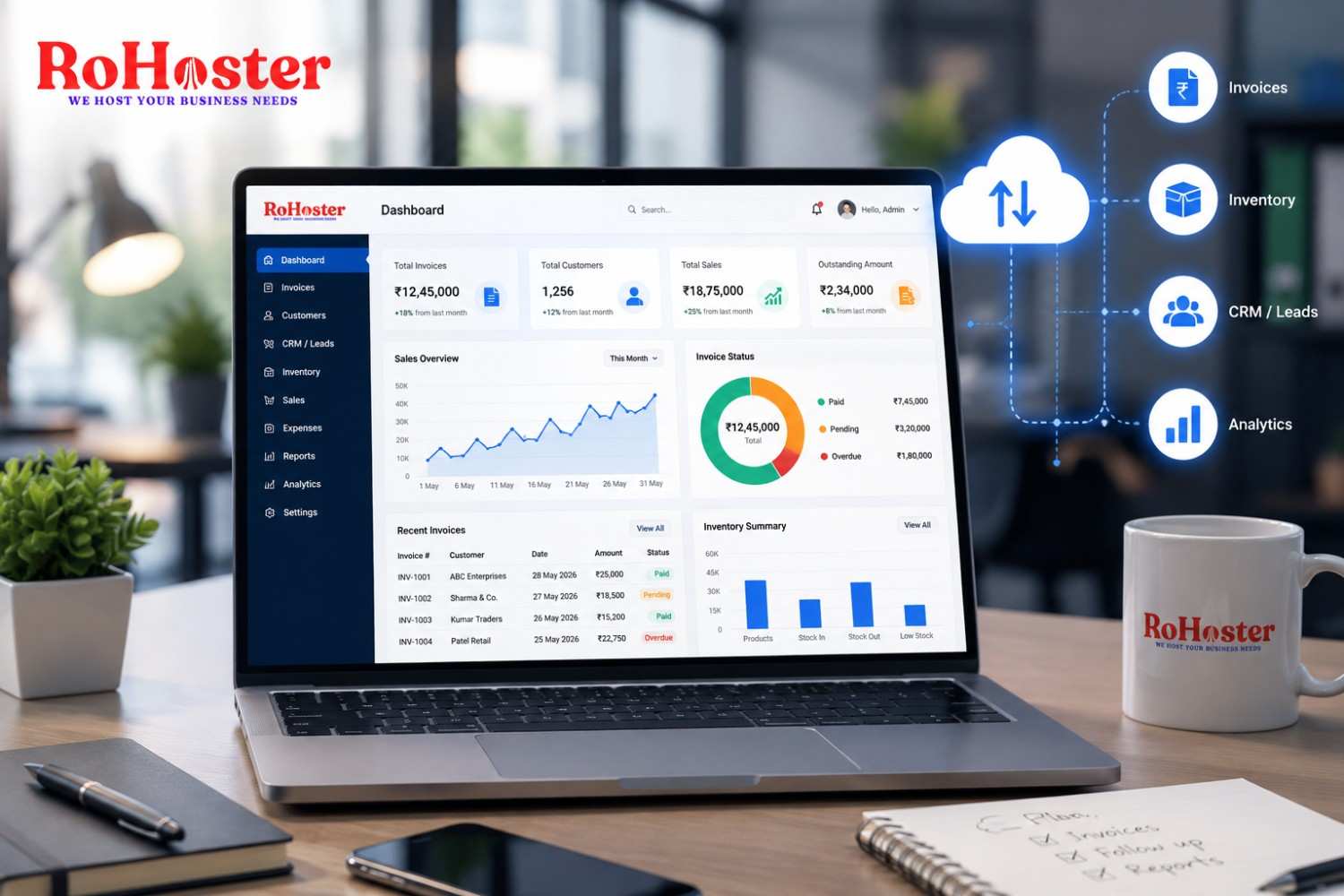
RoHoster helps businesses move everyday operations away from disconnected registers and spreadsheets toward a centralized digital environment.
For retailers and suppliers managing customer relationships and outstanding payments, organized customer information can provide much greater visibility.
Depending on the implemented features and configuration, RoHoster can support areas such as:
- Customer records
- Billing
- Transaction information
- Outstanding payment visibility
- Business reporting
- Sales records
- Cloud-based access
Combined with structured credit policies and digital payment workflows, businesses can create a more organized approach to managing customer udhaar.
Conclusion
The traditional red khata has served Indian businesses for decades.
But the fundamental idea behind it doesn't need to disappear—it simply needs to become smarter.
By digitizing customer udhaar, businesses can maintain clearer records, establish credit limits, track outstanding balances, simplify payment reminders, and make better cash-flow decisions.
Most importantly, they can continue offering trusted customers flexibility without losing visibility over the money owed to the business.
Keep the relationship. Digitize the record. Control the credit.
Further Reading
Want more practical insights on retail operations, customer management, cash flow, and business digitization?
Read the latest business insights from LarchSoft on LinkedIn