India's GST ecosystem has evolved rapidly over the last few years, and one of the biggest changes for businesses has been the introduction of B2B e-invoicing. While the process may sound technical, its objective is straightforward—to standardize invoices, improve tax compliance, and reduce fraudulent transactions.
For many manufacturers, wholesalers, and SMEs, understanding e-invoicing can feel overwhelming. Questions about IRN generation, QR codes, GST compliance, and government thresholds often create confusion.
Fortunately, modern business management software makes the entire process almost effortless by automating invoice generation, IRN registration, and GST compliance.
In this guide, we'll explain how B2B e-invoicing works and why automation is becoming essential for growing businesses.
What Is B2B E-Invoicing?
An e-invoice is a GST-compliant invoice generated electronically for business-to-business (B2B) transactions.
Instead of simply creating a PDF invoice, businesses generate invoice details in a prescribed format that is validated through the government's Invoice Registration Portal (IRP).
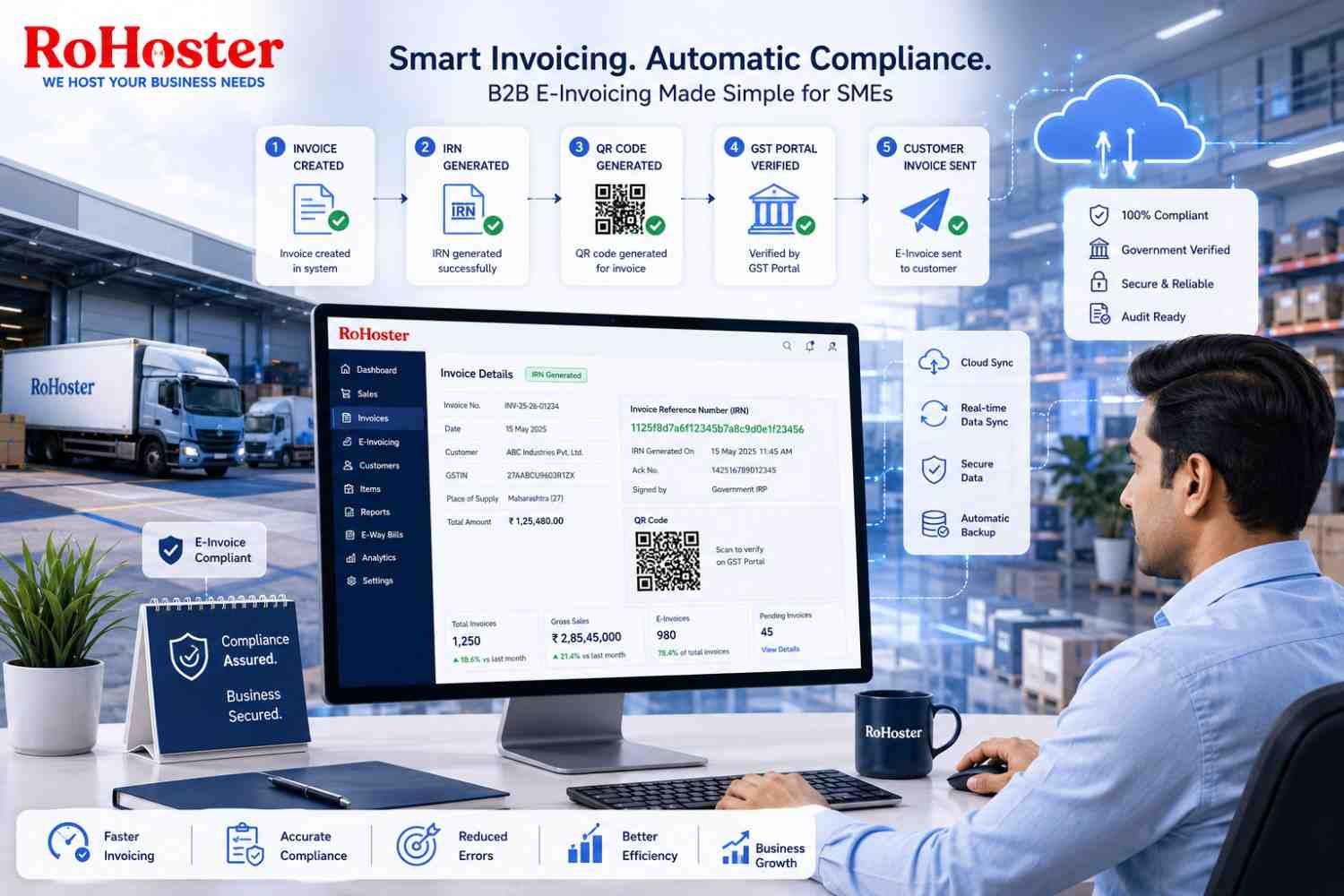
After successful validation, the invoice receives:
- Invoice Reference Number (IRN)
- Digital authentication
- QR Code
- Government validation
This verified invoice can then be shared with customers while remaining compliant with GST regulations.
Who Needs to Generate E-Invoices?
The applicability of e-invoicing depends on the turnover thresholds notified by the Government of India, which may change over time.
Businesses should regularly check the latest GST notifications to confirm whether they fall under the current mandate.
Generally, e-invoicing is relevant for:
- Manufacturers
- Wholesalers
- Distributors
- Large suppliers
- Growing SMEs crossing notified turnover limits
Using GST billing software that stays updated with regulatory changes helps businesses remain compliant without manually tracking every notification.
Understanding the E-Invoice Workflow
The e-invoicing process becomes much simpler when viewed step by step.
A business first creates a GST invoice.
The billing software automatically prepares the invoice in the required format.
The information is securely submitted to the Invoice Registration Portal.
The portal validates the invoice and generates an Invoice Reference Number (IRN) along with a digitally signed QR code.
The validated invoice is then ready to be shared with the customer.
With modern cloud business management software, this entire workflow happens within seconds.
Why Manual E-Invoicing Creates Problems
Many businesses still prepare invoices manually before uploading information to government portals.
This process often results in:
- Duplicate data entry
- Typing mistakes
- Delayed invoice generation
- Incorrect GST details
- Compliance risks
As transaction volumes increase, manual processing becomes increasingly difficult to manage.
Automation eliminates repetitive work while significantly improving accuracy.
Cloud Software Makes Compliance Easy
Modern GST billing software automatically integrates billing with e-invoicing.
Instead of visiting multiple portals, businesses can:
- Generate GST invoices
- Submit invoice details
- Receive IRN
- Generate QR codes
- Store invoices securely
all from one dashboard.
If you're evaluating billing platforms, our guide How to Choose the Best GST Billing Software for Your Small Business in India explains the essential features businesses should consider before investing in software.
Faster Invoicing Improves Business Operations
Generating compliant invoices manually consumes valuable time.
Cloud-based automation allows businesses to create verified invoices almost instantly.
This improves:
- Dispatch speed
- Customer satisfaction
- Documentation accuracy
- Operational efficiency
When billing becomes faster, every downstream process—from logistics to payment collection—also becomes more efficient.
Integrating E-Invoicing with Inventory
An invoice doesn't just record a sale—it also affects inventory.
Modern business management software automatically updates inventory whenever an invoice is generated.
This ensures:
- Accurate stock levels
- Better warehouse visibility
- Improved purchase planning
- Reduced manual work
Businesses handling large shipment volumes benefit even more when inventory and invoicing work together.
Our article Streamline Your Logistics: Integrating E-Way Bill Generation with Stock Tracking explains how combining inventory and compliance processes improves overall logistics efficiency.
Security and Record Keeping
Businesses are responsible for maintaining accurate invoice records for audits and compliance purposes.
Cloud platforms provide:
- Secure storage
- Automatic backups
- User access controls
- Digital records
- Easy invoice retrieval
This significantly reduces the risk of lost documents or accidental data deletion.
Why SMEs Should Automate Early
Many SMEs wait until compliance becomes mandatory before upgrading their systems.
However, businesses that automate earlier gain several advantages:
- Faster operations
- Reduced administrative effort
- Better reporting
- Improved accuracy
- Easier business scaling
Implementing automation before transaction volumes become difficult to manage makes future growth much smoother.
Why RoHoster Is Built for GST Compliance
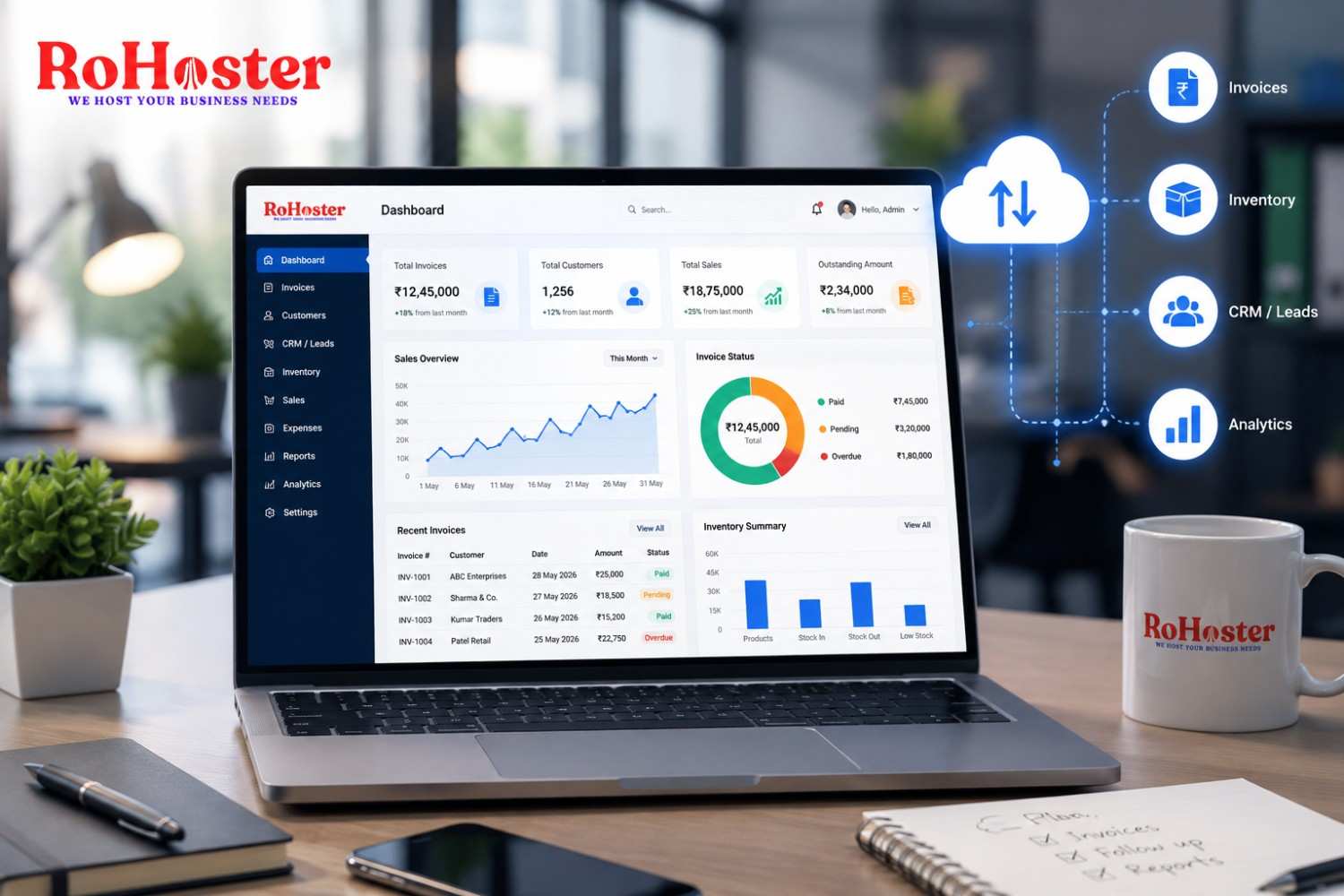
RoHoster simplifies GST compliance by combining billing, inventory, reporting, and business operations into one secure cloud platform.
Businesses can:
- Generate GST-compliant invoices
- Automate IRN generation
- Maintain digital invoice records
- Manage inventory
- Access business reports
- Monitor operations remotely
- Stay prepared for evolving compliance requirements
Instead of using separate applications for billing and compliance, everything is managed from one centralized dashboard.
Conclusion
B2B e-invoicing is no longer just a regulatory requirement—it has become an opportunity for businesses to modernize their operations.
By using business management software with integrated GST billing and e-invoicing capabilities, SMEs can reduce manual work, improve compliance, and simplify day-to-day operations.
As government regulations continue to evolve, businesses that embrace automation today will be better prepared for tomorrow.
Further Reading
Want more insights on GST compliance, business automation, and digital transformation?
📖 Read our latest business insights on LarchSoft's LinkedIn